
Article
v1.0
The human coordination layer that faster AI leaves behind
More summaries and recommendations still need to be interpreted and coordinated. An operating layer brings shared context, company judgement, and learning into that work.

I think one of the biggest mistakes we can make with AI in GTM is assuming that making every part of the work faster will make the organisation more intelligent.
Most GTM organisations already have enormous amounts of data.
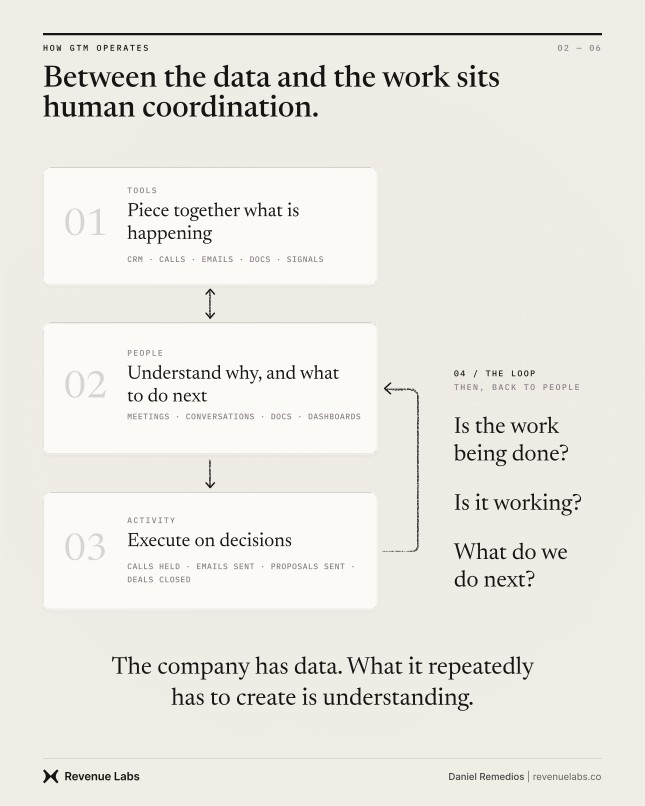
Salesforce tells us what happened to the opportunity.
Gong tells us what was said.
Product data tells us what customers are doing.
Signals tell us what might be changing.
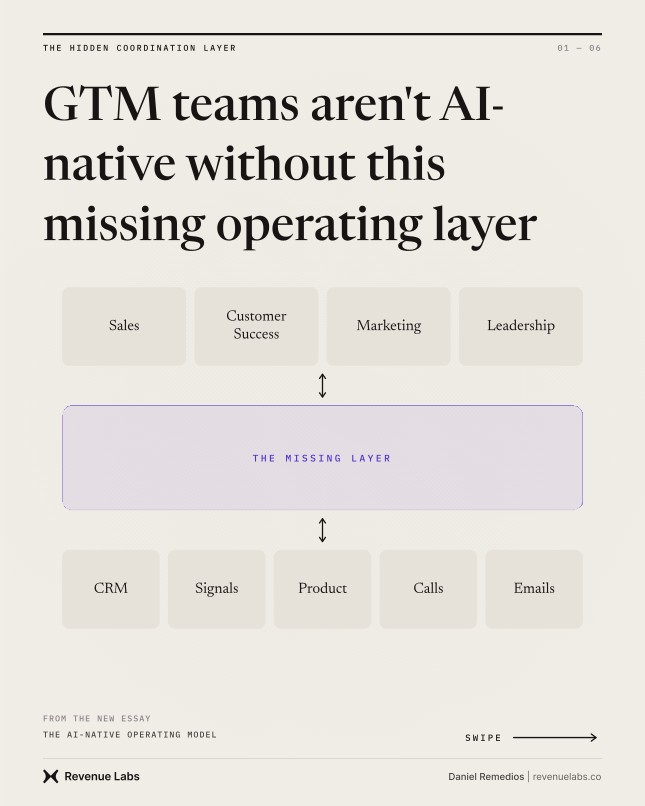
But between all of that data and the work sits a hidden layer: human coordination.
People continuously piece together what is happening, decide what it means, determine what should happen next and coordinate everyone around the decision.
Then they do it again.
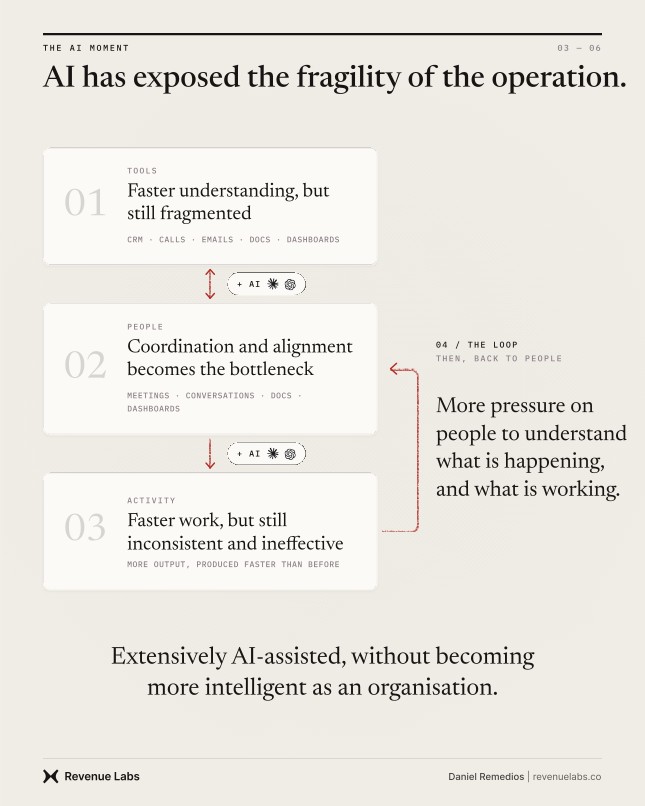
AI is making the systems around this layer much faster.
→ Calls can be summarised instantly
→ Accounts can be researched automatically
→ Deals can be assessed continuously
→ Emails and follow-ups can be generated in seconds
→ Thousands of signals can be analysed at once
But if the underlying operating model doesn’t change, we’ve accelerated the work without removing the coordination required to make the organisation operate.
In some cases, I think we may actually make the problem worse.
More information. More recommendations. More activity. More decisions.
All arriving faster than the organisation can understand, coordinate and learn from them.
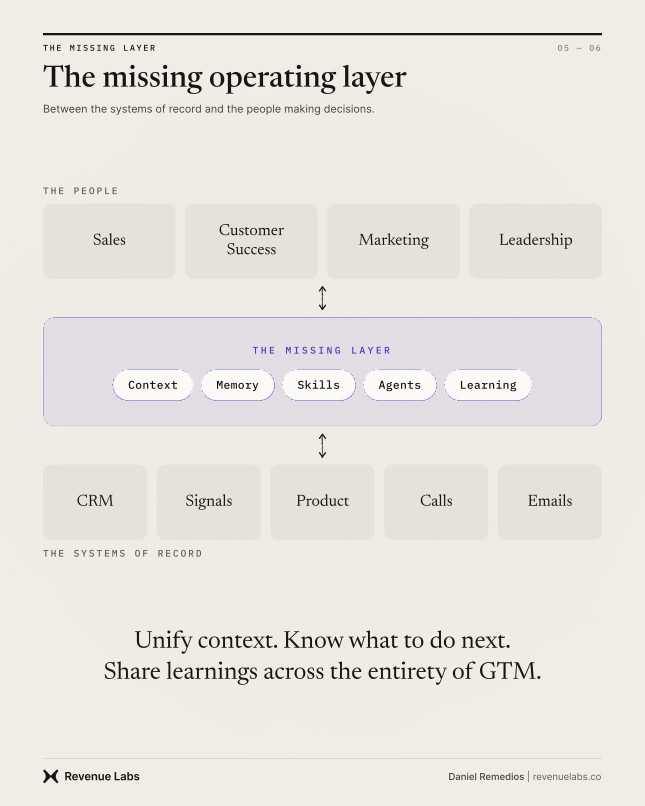
That’s why I’ve become increasingly convinced that AI-native GTM isn’t primarily about adding AI to the existing GTM stack.
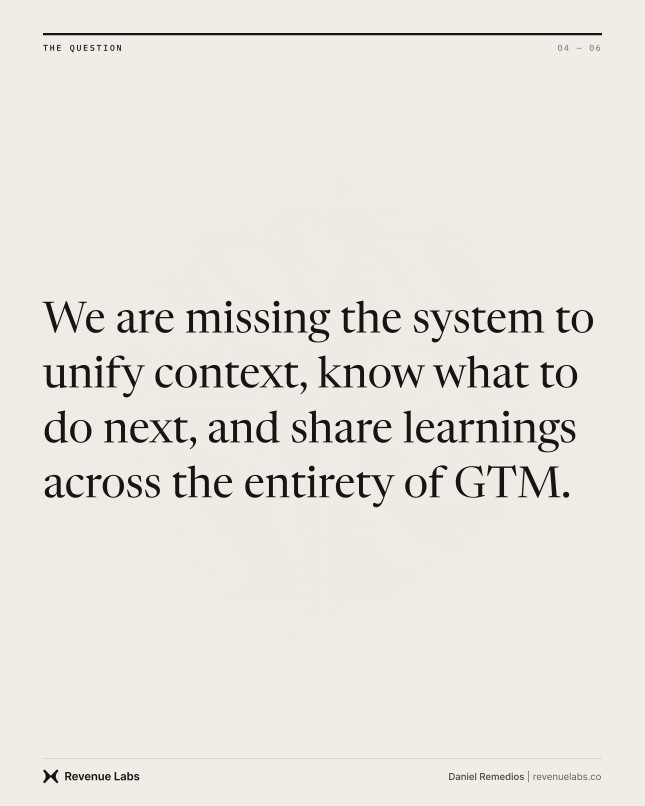
It requires a new operating layer between the systems of record and the people making decisions.
One that can unify live commercial context, apply shared company knowledge and judgement, determine what requires attention, coordinate action and learn from what happens next.
Context → Memory → Skills → Agents → Decision Traces
The important shift is from using AI to help people operate the existing system faster, to building a system that can increasingly understand, decide, act and learn alongside them.
That’s a very different idea of what AI-native GTM becomes.
This essay is versioned. Where our thinking develops materially, we will update the version and explain why - the revision history is preserved, not polished away.