The AI-native GTM system you build, grow, and scale on.
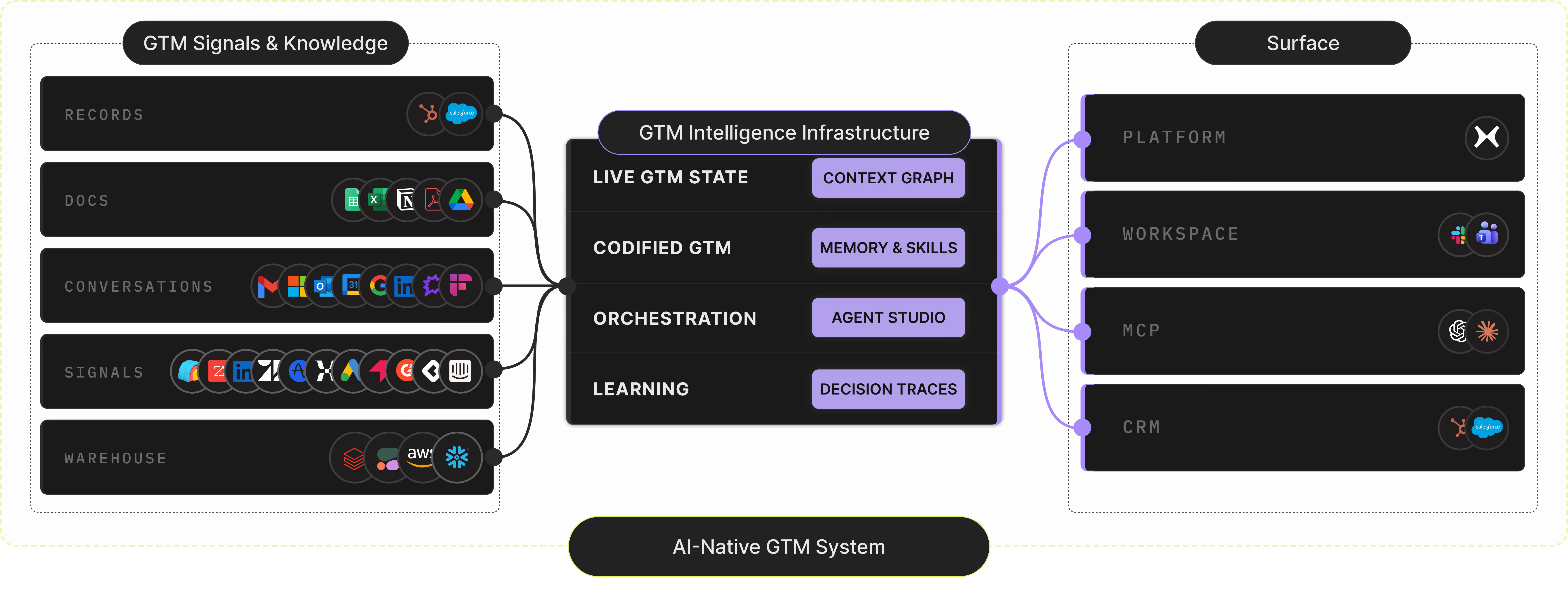
Replace a fragmented GTM operation held together by human coordination with one system that understands what's really happening, decides the next best action, and learns from every outcome.
Replace a fragmented GTM operation held together by human coordination with one system that understands what's really happening, decides the next best action, and learns from every outcome.
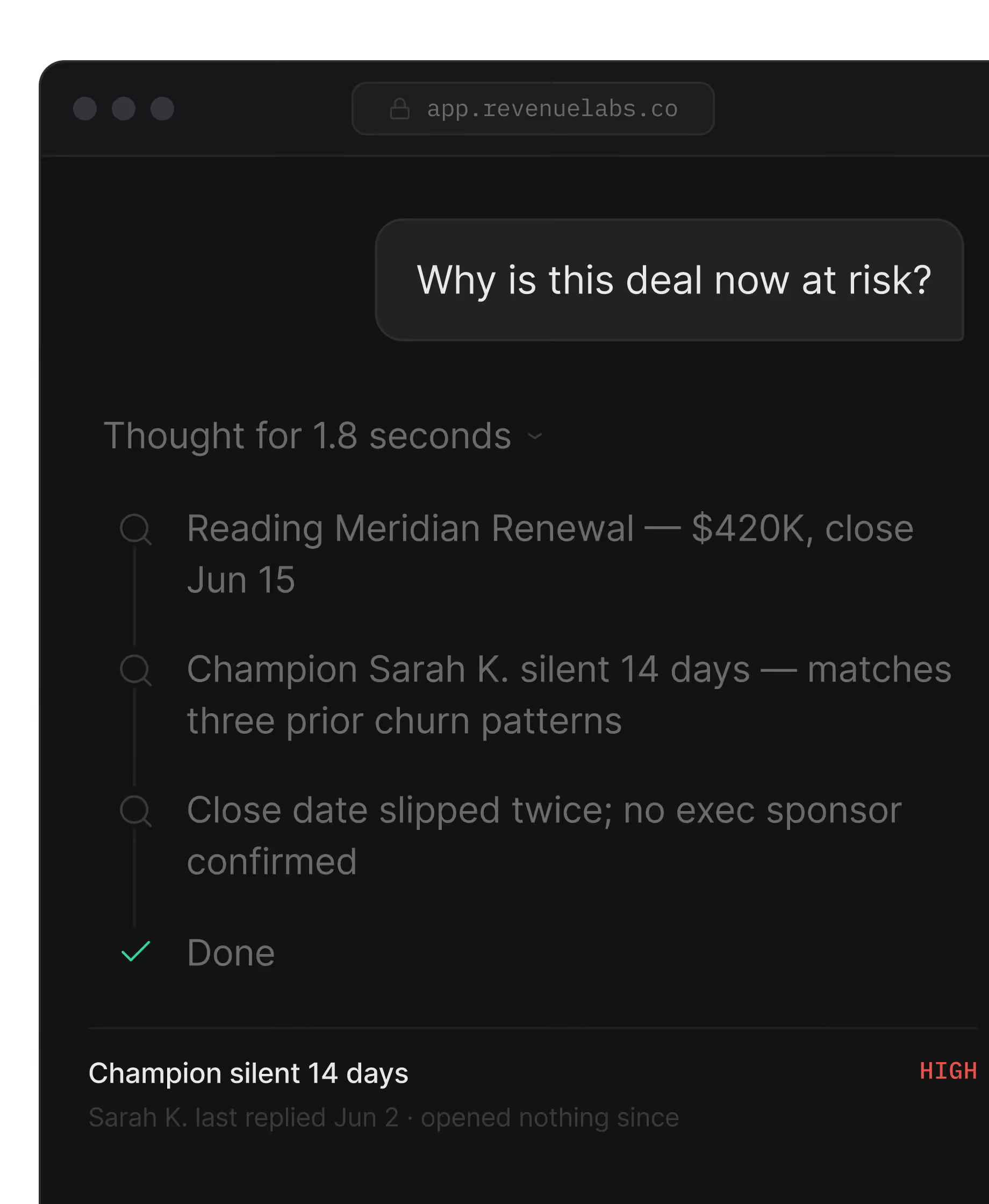
Reveal what's happening, what's changing, why it is changing, how confidence is shifting, and what should happen next.
Learn More About Context →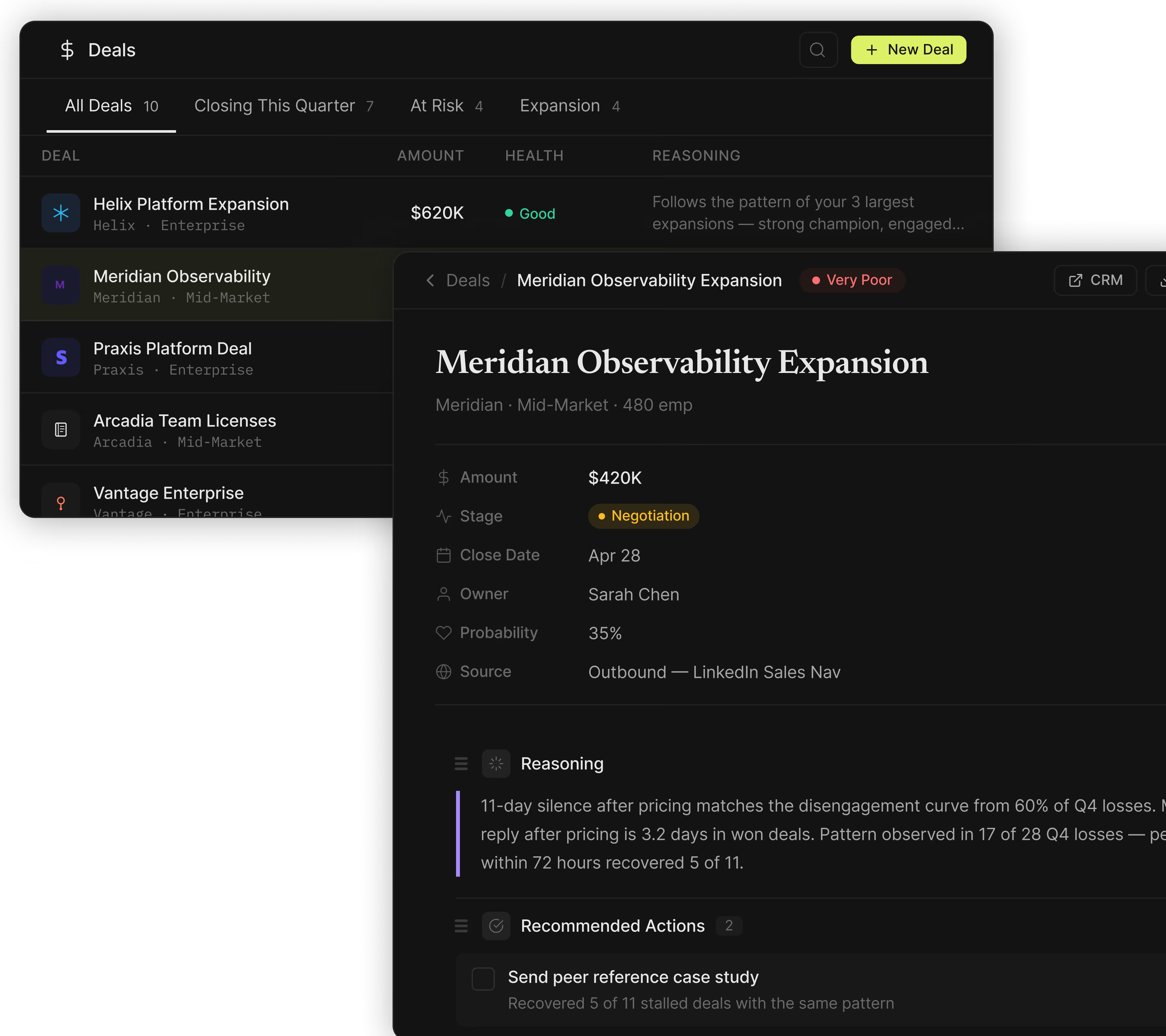
Codify your GTM knowledge, making them accessible to all, anywhere. From memory of your ICP, sales process + product, to skills for call scripts, objection handling and multi-threading - operationalize your knowledge.
Learn More About MEMORY + SKILLS→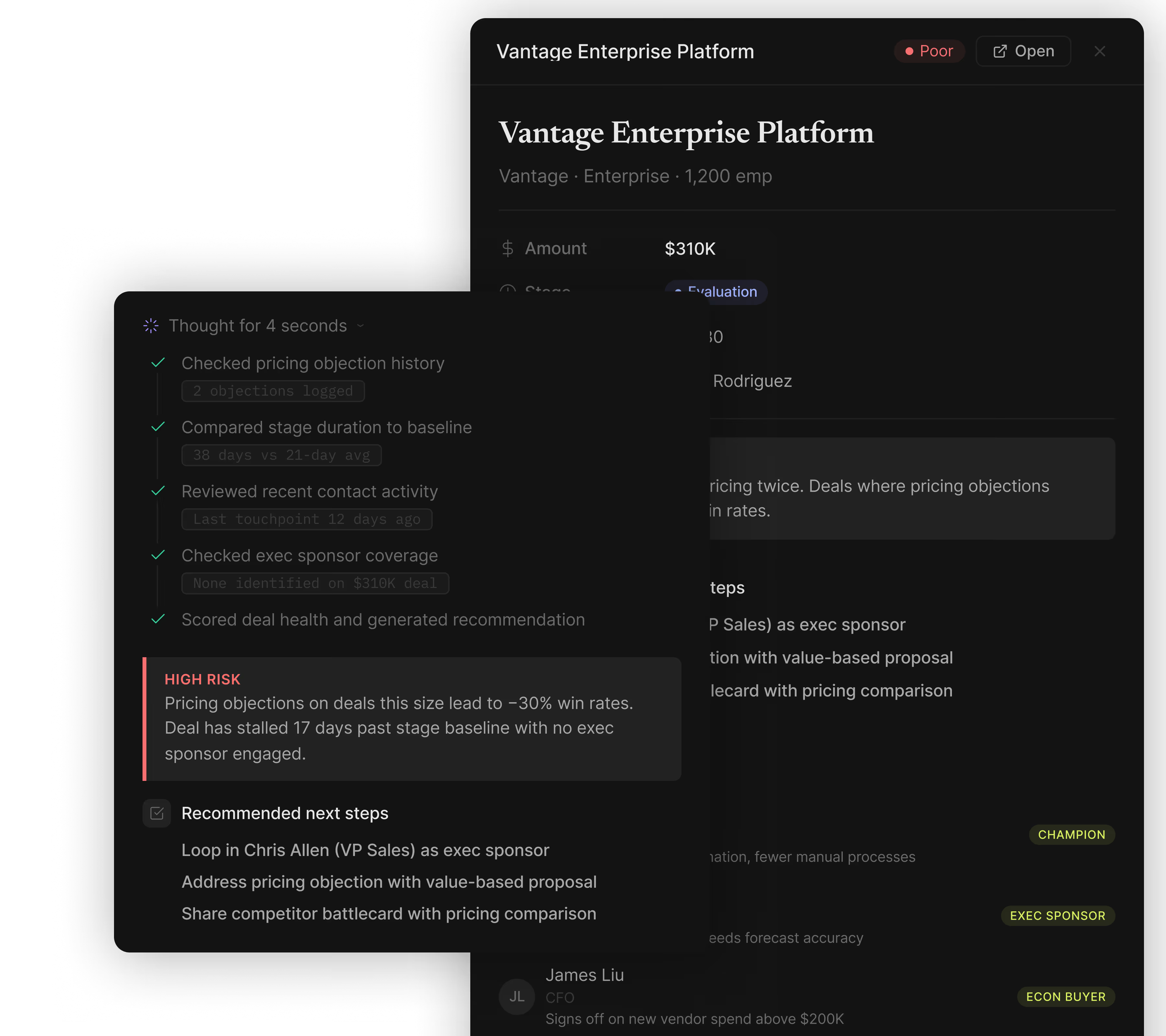
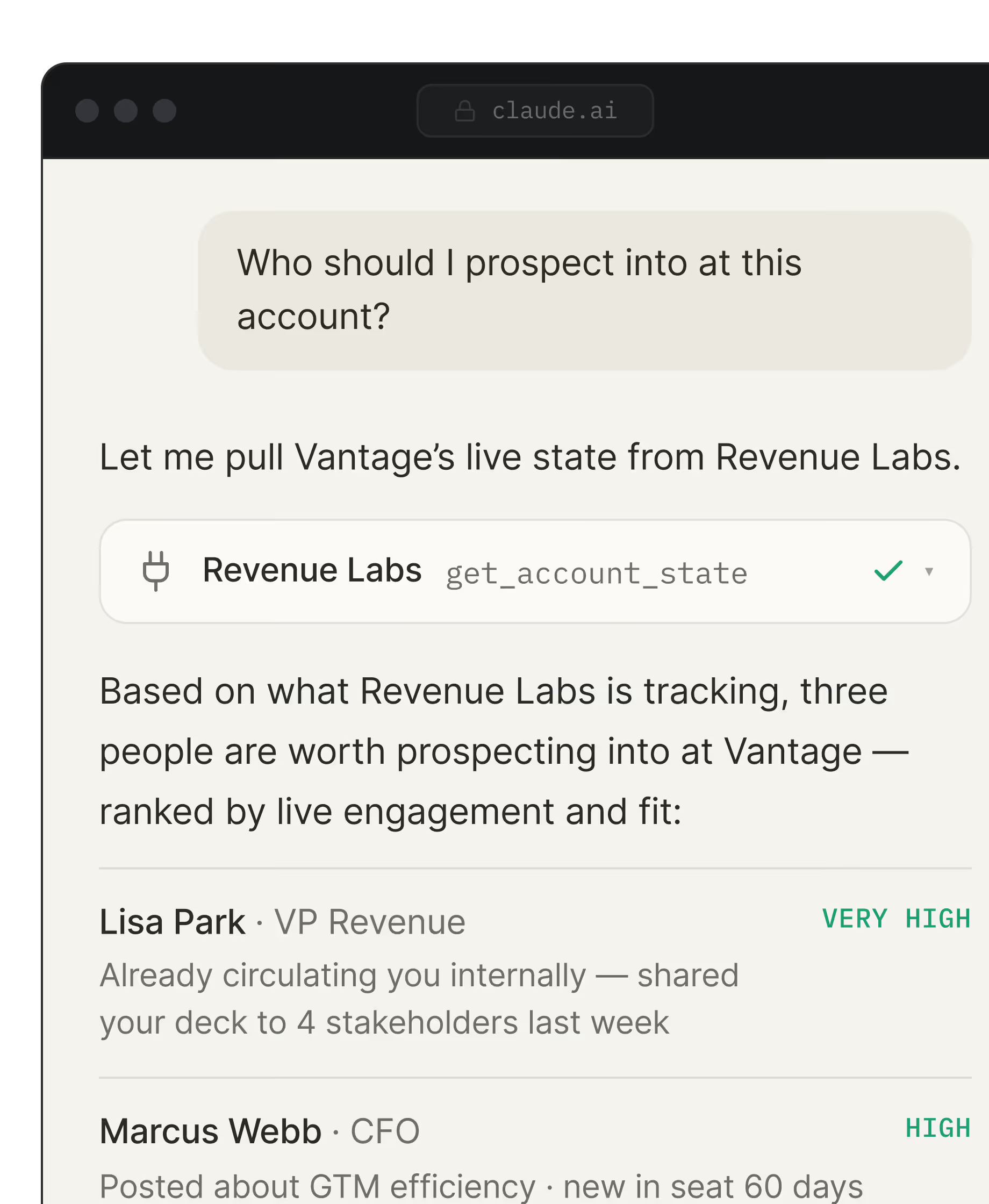
Agents are connected to live GTM state and codified memory + skills, enabling them to run consistently, effectively, and autonomously.
Learn More About Agents→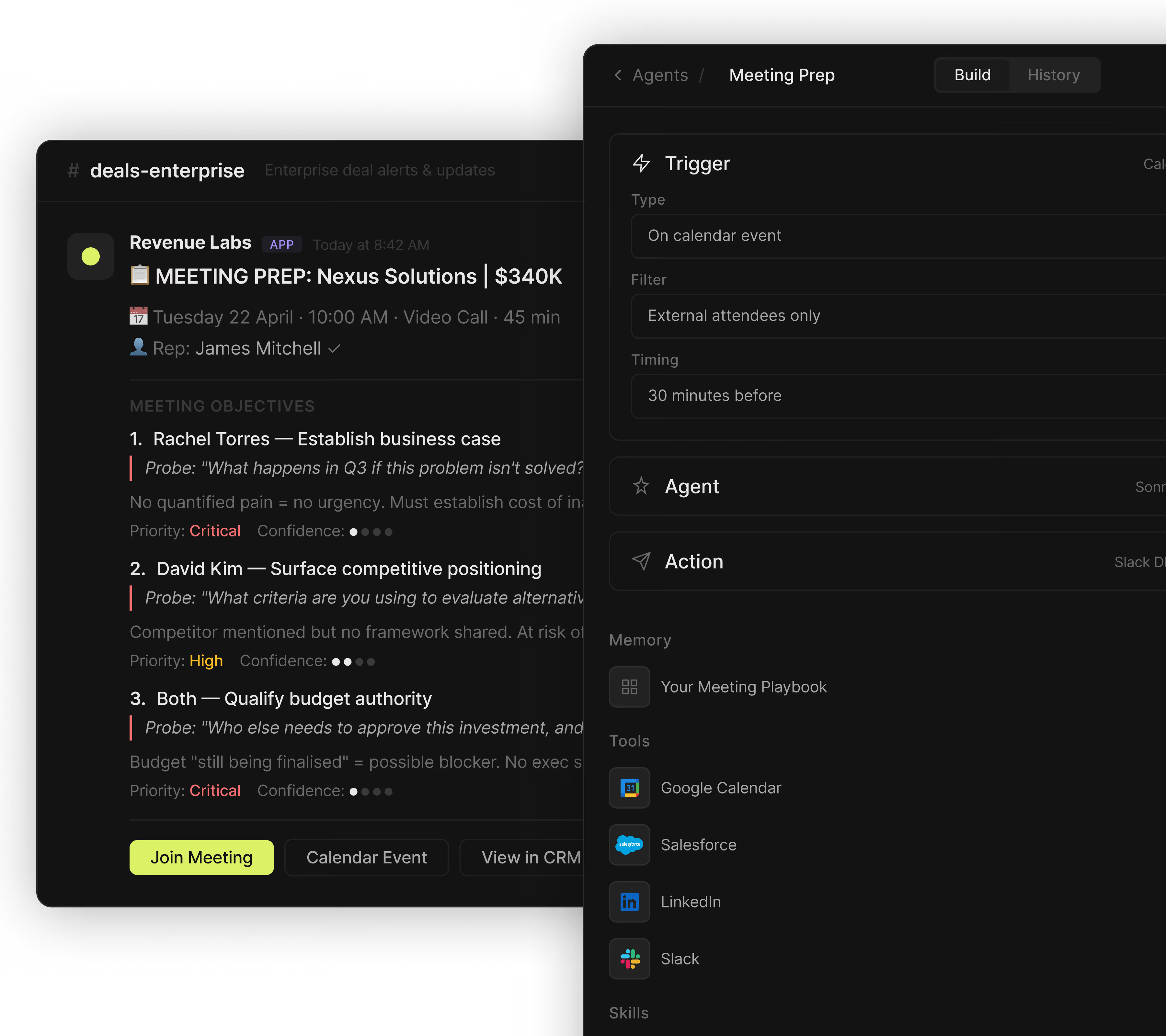
Learning compounds from every deal won and lost. Skills sharpen, memory refines, and your GTM adapts to the ever-changing reality of your market.
EXPLORE More About LEARNING→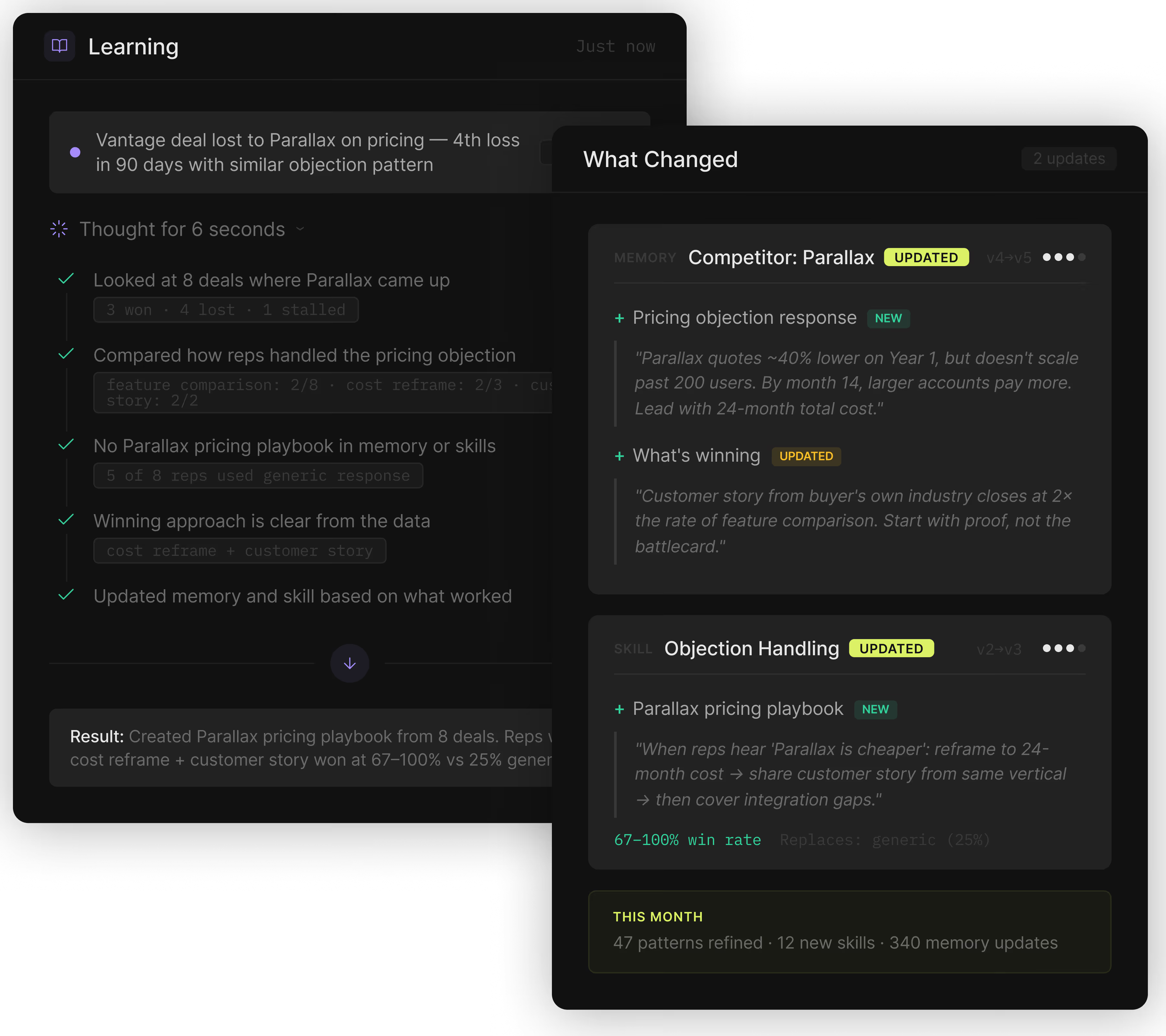
What You Get
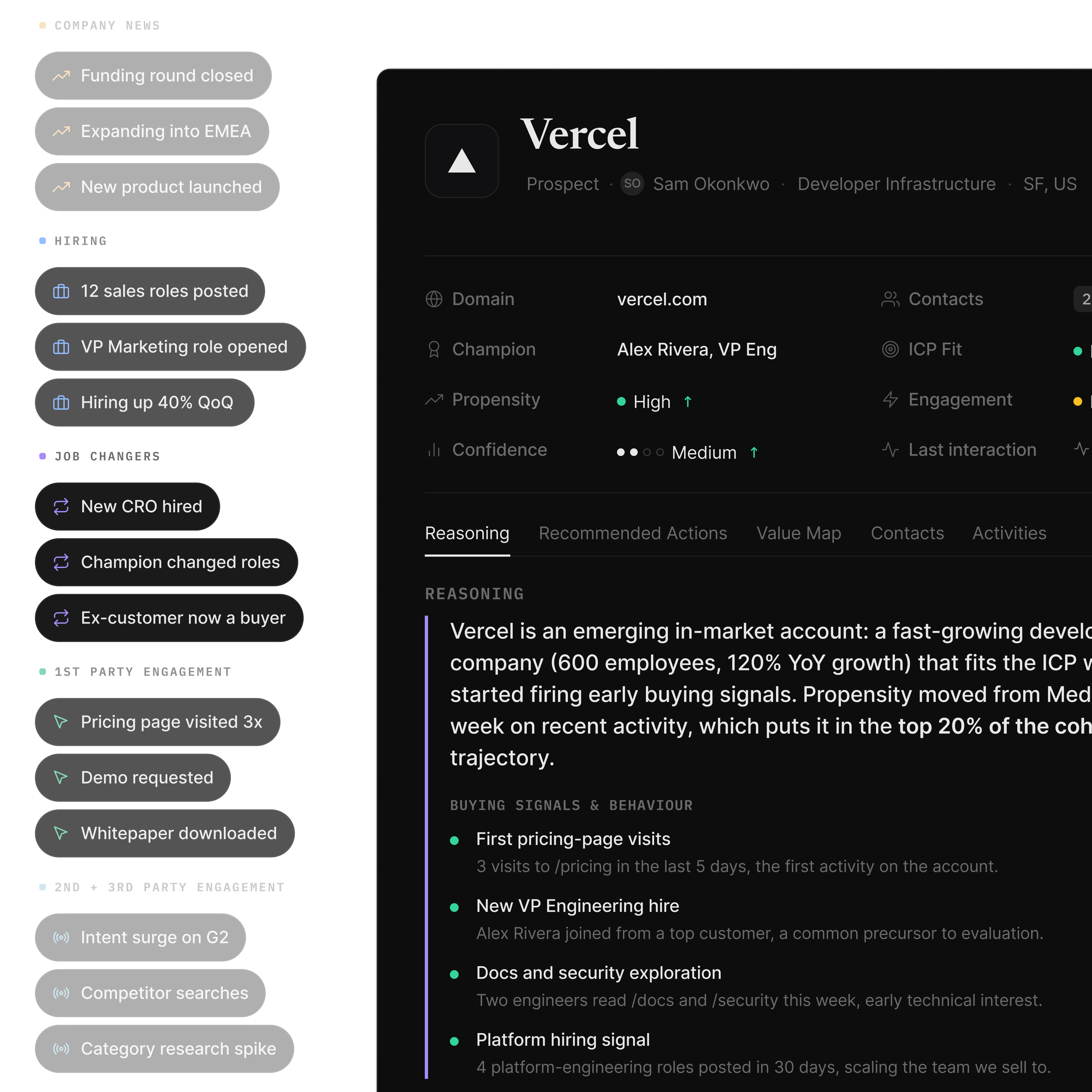
✓Detect buying signals that reveal accounts entering market from web research, engagement, and website signals.
✓Build dynamic segments, campaign angles and artifacts from live customer + prospect context.
✓Route accounts into channels, alert sales when in-market, and learn which messages are driving outcomes.
EXPLORE MARKETING →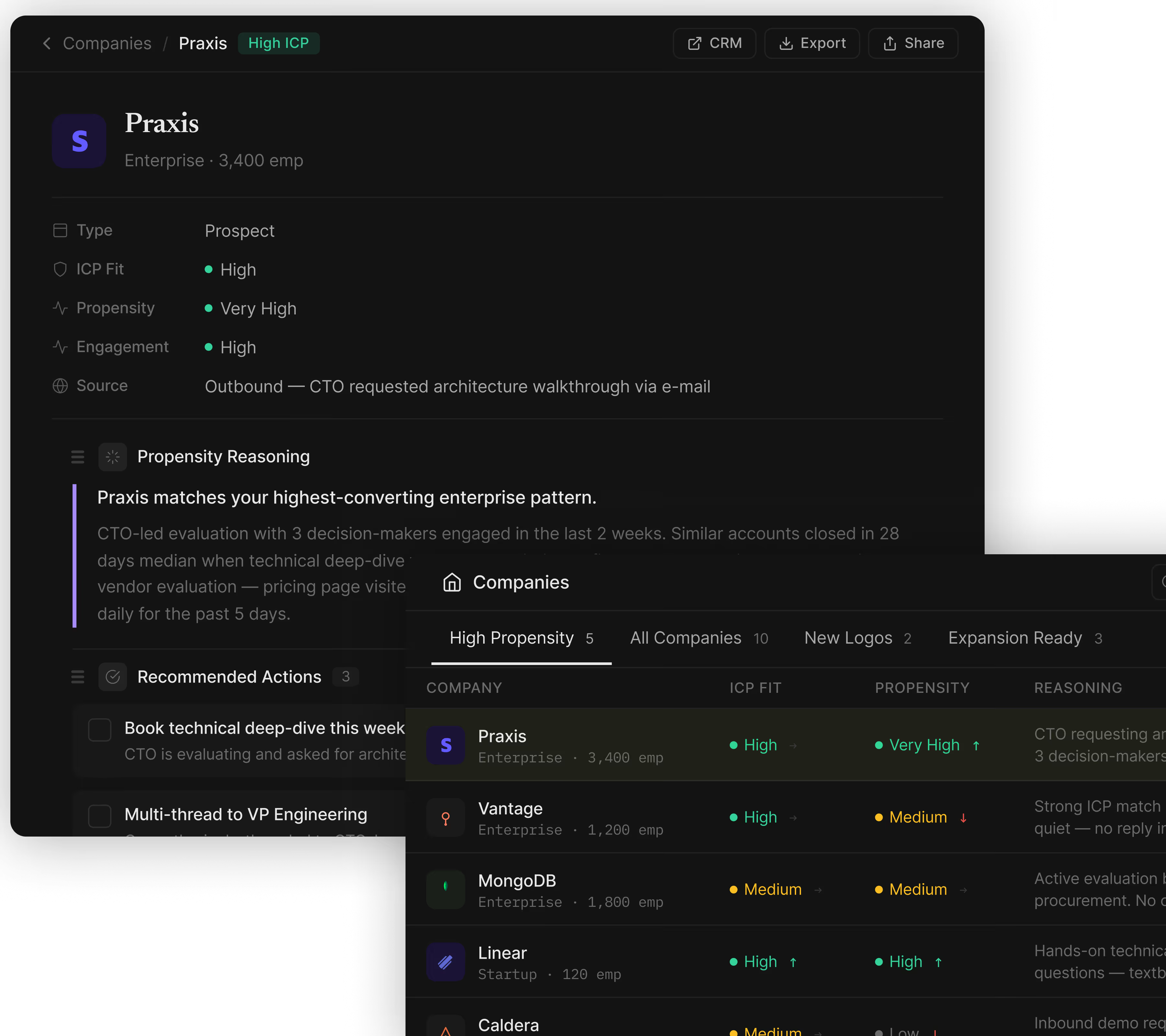
BUILD MORE PIPELINE
✓Proactively monitor thousands of high-fit accounts, mapping your entire market in real time.
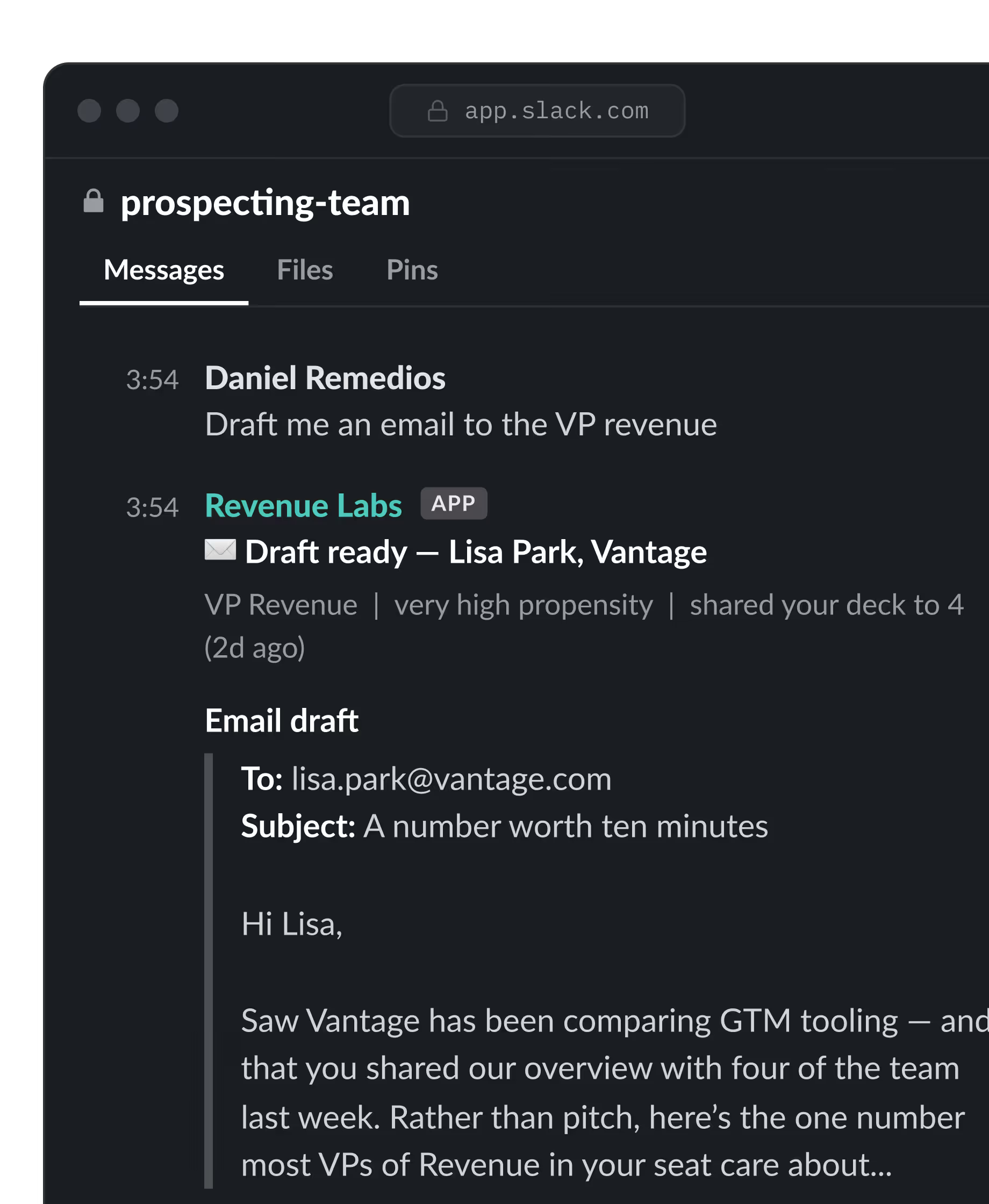
✓Agents draft emails, call scripts and messages aligned to the prospect's pains.
✓Route the best accounts through to your reps at the right time, with the recommended path to booking a meeting.
Explore PROSPECTING →CLOSE MORE DEALS
✓Equip every rep before and after meetings with what the system knows works.
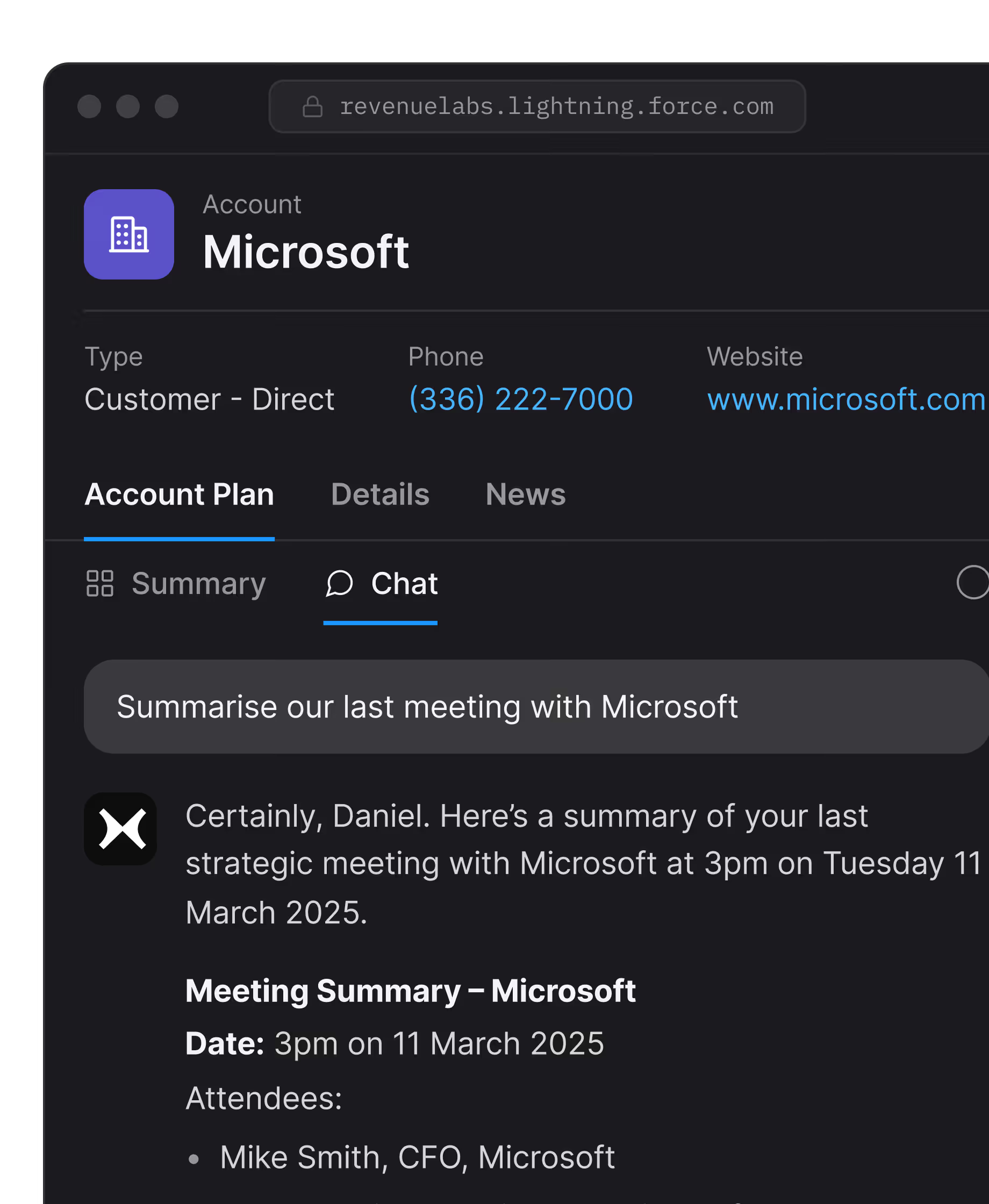
✓The system preps every rep before the meeting and captures the lesson after. Coaching becomes infrastructure.
✓Turn every meeting into a lesson the whole team improves from, not just the rep in the room.
Explore DEALS →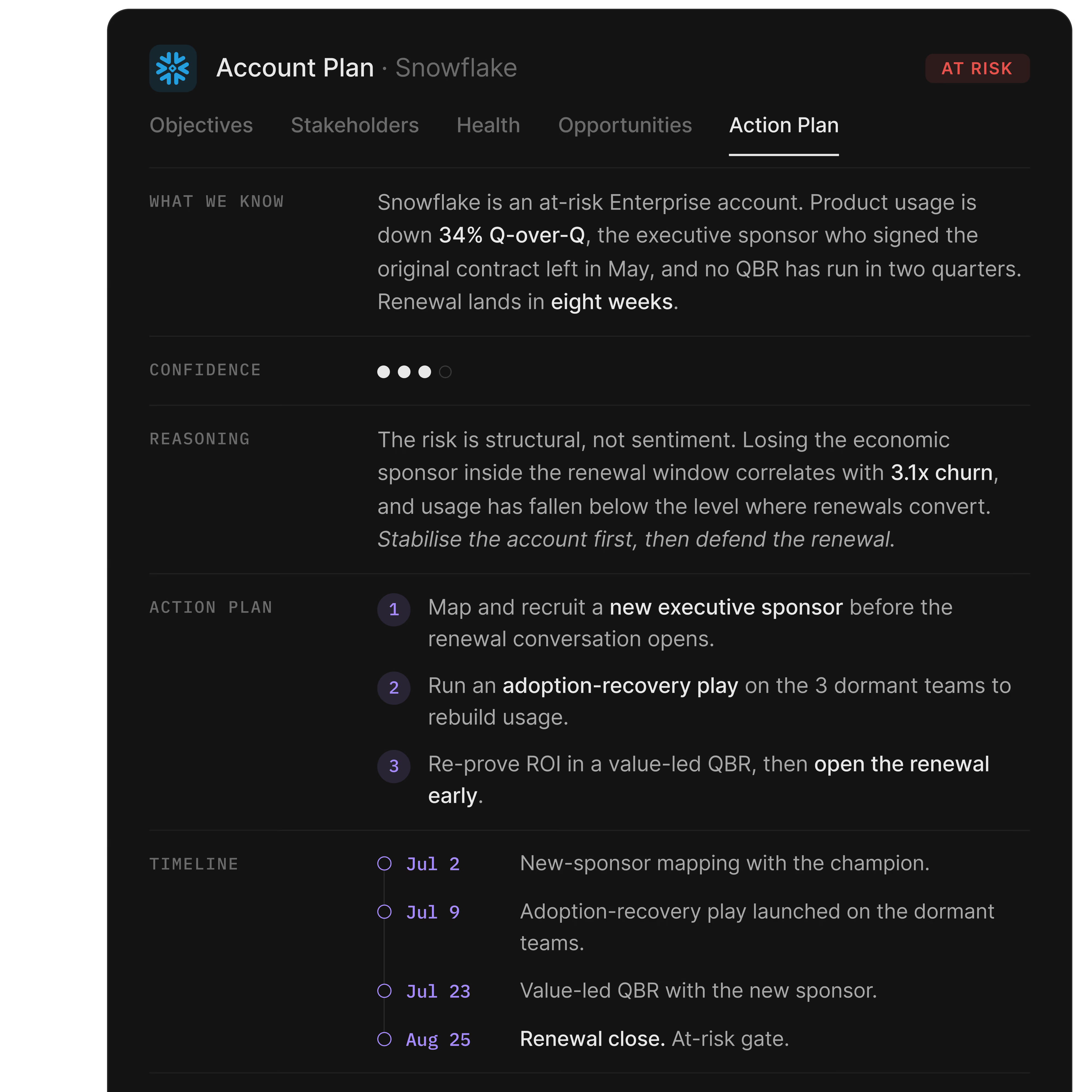
What You Get
✓Monitor adoption and risk continuously, with customer state evolving with signals from product, engagement + stakeholder changes.
✓Trigger cross-sell and upsell plays based on proven expansion signals.
✓Route executive risk as it emerges, and learn from every renewal and expansion.
EXPLORE CUSTOMER SUCCESS →Ready when you are
One system to codify, grow and scale on.
It's one connected system that understands what's happening on every account, deal and contact, decides the next best action, and learns from every outcome. Underneath it are four things working as one: live state instead of static records, your GTM codified into memory and skills, agents that orchestrate the work, and continuous learning from every decision. Instead of static reports and dashboards, it produces live artifacts: a briefing, a deal review, a territory analysis, generated in natural language and tailored to the person reading it. It is not AI features bolted onto your CRM. It is a new foundation beneath your GTM.
Bolt-on AI sits on top of fragmented tools and stale records, so it just automates the guesswork faster and produces more noise. AI-native means the intelligence lives in the foundation, working from a live, shared understanding of your commercial reality rather than from disconnected fields. The first wave of this was AI features inside old tools. The second was bolt-on AI SDRs doing more, faster, on the same broken base. The real shift is a different operating model underneath the whole motion. AI amplifies whatever system it runs inside, so we change the system.
It connects to your CRM, your conversations like calls and email, your product and warehouse data, and third-party signals: structured and unstructured, from CRM to calls to intent to hiring to news. A forward-deployed team does the heavy lifting. We map where your data actually lives, connect the right sources (often the warehouse, like Snowflake, for product and usage data), and build your context graph from there. You don't need to hand us perfect documentation; we work it out alongside your team. And when a new source is needed, building the integration is usually a matter of days, not months.
Bad data at source is the universal GTM problem, and chasing it record by record is a race to the bottom, because contacts go stale by the time you need them. Rather than fix the mess inside each tool, the system builds a master understanding above your stack. It surfaces where coverage is missing, like industry, size or location, and uses research agents to fill the gaps so good accounts aren't excluded from your ICP model by a blank field. It keeps accounts and contacts current on a cycle, flags duplicates and people who've moved on, and sources fresh contacts just in time based on an account's propensity. So data quality stops being a manual cleanup project and becomes something the system maintains.
Both, and you decide where the line sits. Agents research accounts, build and maintain lists, draft outreach tuned to the live context, prep meetings, update the CRM off the back of a call, and enroll accounts into the right campaigns when the trigger conditions are met. The rule of thumb is simple: anything a person can do, an agent can be defined to do. Every action either runs automatically or waits for a human to approve, edit or dismiss it, and that choice is yours per workflow. This is governed, not autopilot, which is also how the system earns trust before you hand it more.
No, and this matters for adoption. The intelligence surfaces where your team already works: Slack, Teams, and your CRM. A rep gets the one or two things relevant to them, with the reasoning and the recommended action, rather than another dashboard to log into and maintain. The building happens elsewhere: leaders and ops define the agents and artifacts in the workspace, and the output flows to the rep in context. The goal is to take work off the rep's plate, not to give them a new system to drive.
Your data runs in a dedicated, isolated instance, never shared with other customers or external tools, and encrypted both in transit and at rest. We hold to recognised security standards and can support data residency requirements where you need them. Security and trust documentation is available on request, and we're happy to put our technical team in front of yours to work through IT and compliance review.
Often, yes, and that's usually where the value case starts. If a tool exists to visualise static data or run a single workflow, the system absorbs that job and adds the context behind the numbers, which a dashboard can't. Customers use it to retire reporting and BI tools, pipeline-inspection tools, list-builders and various point solutions, then run from one system instead of a stack held together by human coordination. Consolidating that spend is often the clearest, fastest part of the return, before you even count the lift in conversion and focus.
You can build workflows yourself; teams do it with a warehouse, Clay and N8N. You can't easily build the system underneath: live state, versioned memory, agents on shared context, and a learning loop from every outcome. That's a product roadmap, not a quarter's project, and it comes with permanent maintenance and a single point of failure who built it. We connect your stack in weeks and do the heavy lifting for you. Build your GTM on the system, don't spend your GTM building one.
The system traces every recommendation and every outcome. When a rep acts on, edits or dismisses a suggestion, that becomes a signal in its own right, and the system learns from whether the action actually worked, not just whether it was taken. Over time it learns which combinations of signals predict real opportunities, which messages convert, where deals get stuck, and what your best reps do differently. Then it puts that judgement in front of the whole team, so a tactic that lived in one person's head becomes something the system does everywhere. Execution scales linearly. Learning compounds.