Build your CS team a system that knows which customers are at risk, which are ready to expand, and why.

We've worked with GTM teams at:

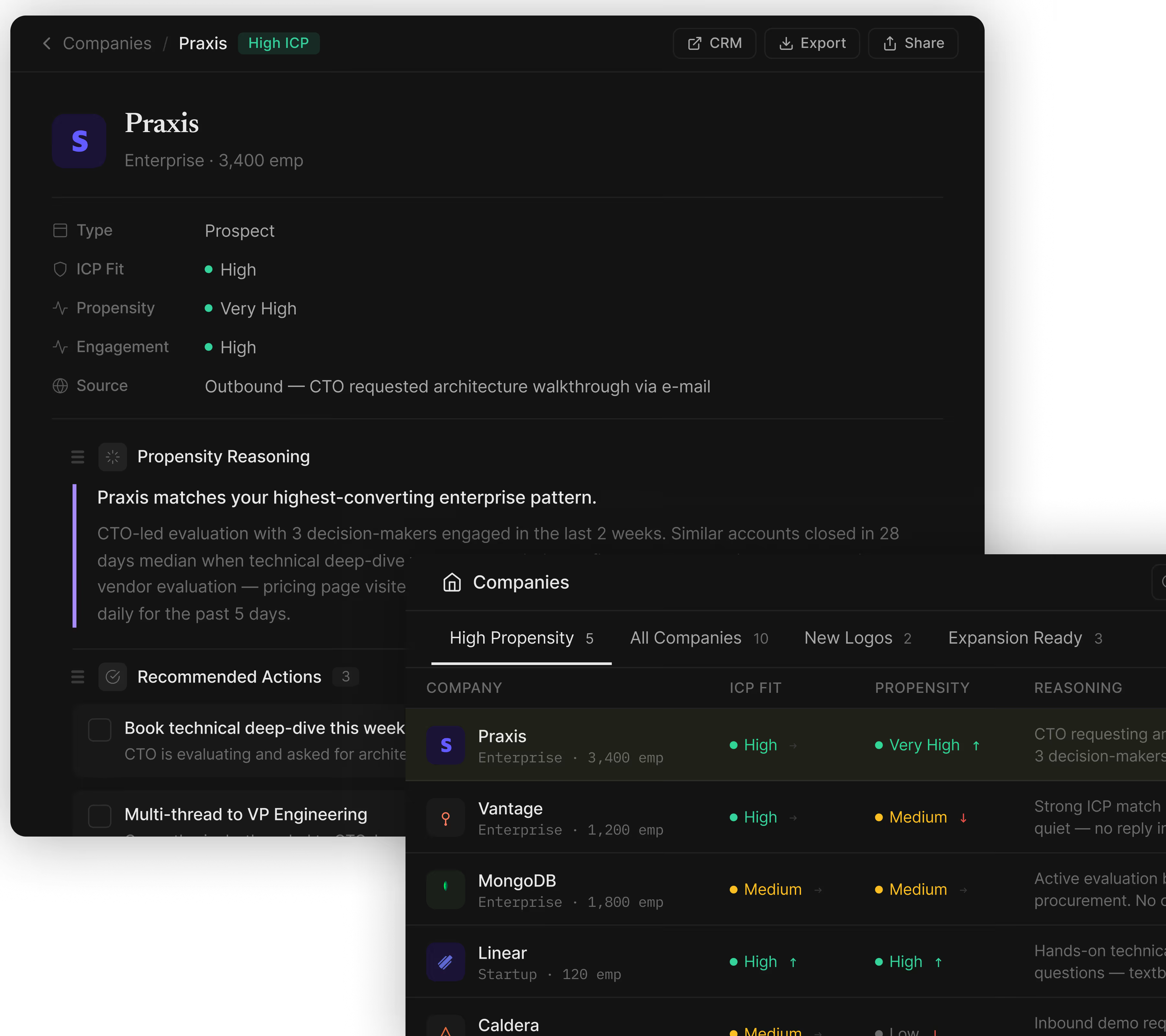
Define the retention motion on live customer context: CHURN + expansion signals revealed as they emerge, and CSMs ENABLED with the reasoning and next best step.

The Shift

CS has more dashboards, scores and decks than ever - but churn still takes them by surprise.

This is what happens when RevOps builds the system that tells CSMs and agents what is happening, and what to do next with each customer.

Decision Debt

The compounding cost of decisions made without understanding why they were made or whether they worked. Like technical debt, it compounds silently — every decision the system can’t learn from makes the next one worse.

Learn more about Decision Debt →

01

Churn surprises arrive too late

The health score was green until the renewal call. The risk signals hid for months in usage data, support tickets and email threads, but nobody saw them in time to act.

02

Expansion is reactive

Upsell is identified when the customer asks, not when the opportunity emerges. The signals that preceded your last ten expansions are lost in several disconnected tools.

03

CSMs stuck doing busywork, not with customers

Digging through the CRM, previous transcripts and support tickets. Writing up notes. Updating fields. Preparing for a QBR takes longer than the QBR.

04

Handoffs lose the account

The AE knows why the customer bought. The CSM starts from a blank record. Every handoff, renewal and re-assignment leaks context that took months to build.

05

CS learning stays in CS

Which customers retain, expand and advocate is the best signal your GTM has, and it never leaves the CS team. Sales and marketing keep targeting accounts that look nothing like the customers who stay.

06

Trust eroding in rigid health scoring models

A score built on structured signals tells you a number changed. It can't tell you why it changed, what it means for the customer, or what to do about it.

01

Churn risk surfaced while you can still act

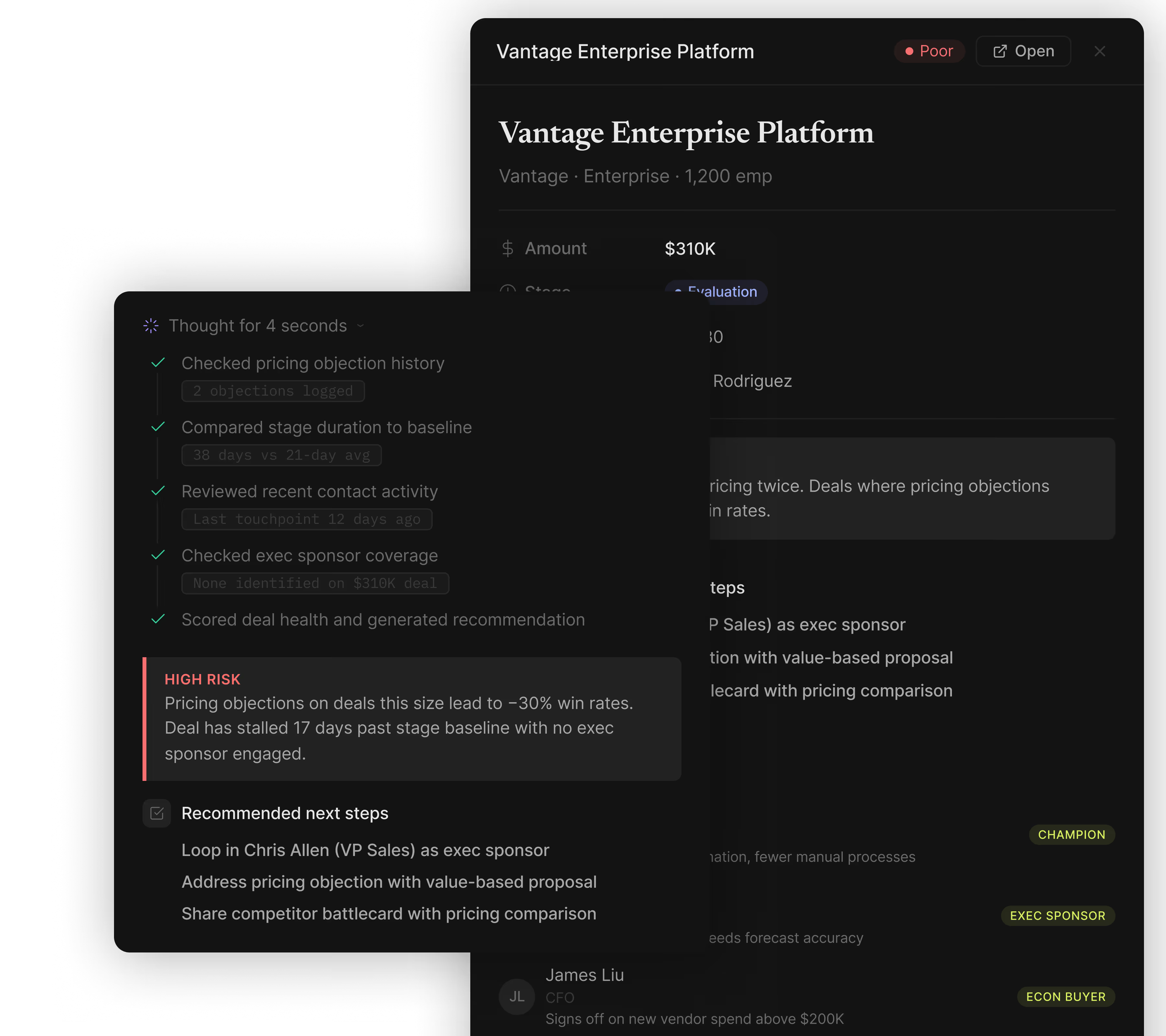
Agents monitor usage, stakeholders, support activity and sentiment on every account, and surface risk with the reasoning and the recommended play attached.

90d

earlier churn signals

02

Expansion revealed before the customer asks

The system knows the signal clusters that preceded your previous expansions, and surfaces the accounts showing them now, with the stakeholders to engage.

3.5x

increase in expansion pipeline

03

Live customer state, not a lagging score

Every CSM opens a current, reasoned summary of the account: what changed, what it means, and what to do next.

60%

reduction in time spent on admin

04

CSMs own relationships, agents own the busywork

Health assessment, QBR prep, record updates, ticket digests. Agents do the digging, so CSMs spend their time with customers.

+45%

increased CSM capacity

05

Handoffs carry the full history

One source of truth from first outbound touch to renewal. New CSM, new segment, new AE: the account context transfers intact, and nobody starts from zero.

55%

faster new hire ramp

06

CS outcomes teach the whole GTM

Every renewal and expansion sharpens the system's understanding of who your best customers are, improving targeting, qualification and messaging upstream.

3x

improved win rates

How we do it
LIVE CUSTOMER CONTEXT

Every customer, usage and activity, unified.

Instant visibility into what's happening, what's changed, and which accounts need attention, across your entire customer base.

>
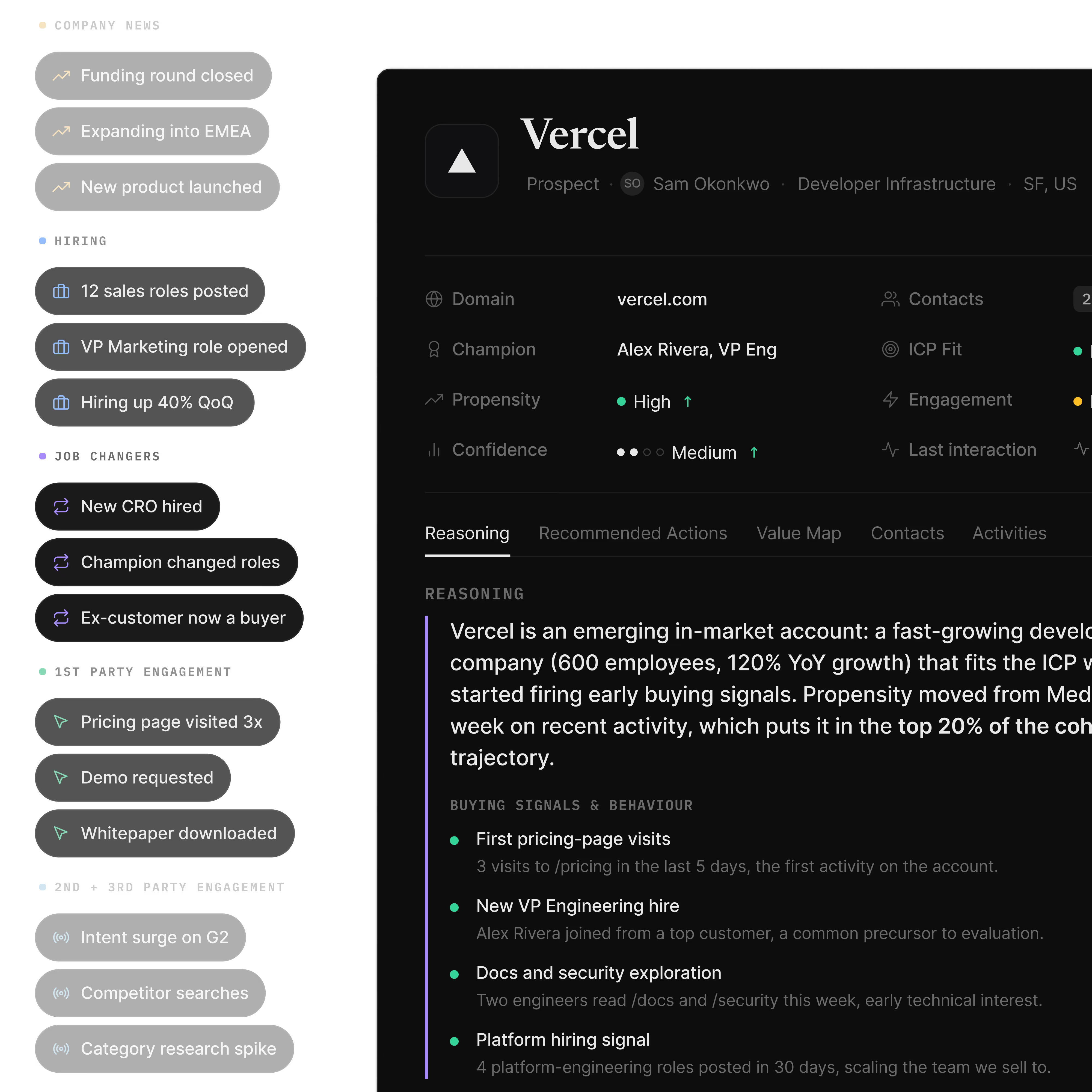
Connect signals from across your customer stack: CRM, support desk, product usage, call recorder, email, stakeholder changes and more.
>
Contextualize every signal against the account: what changed, when, and why.
>
Build live context on every customer, the state of the relationship, and what needs attention next.
In Practice

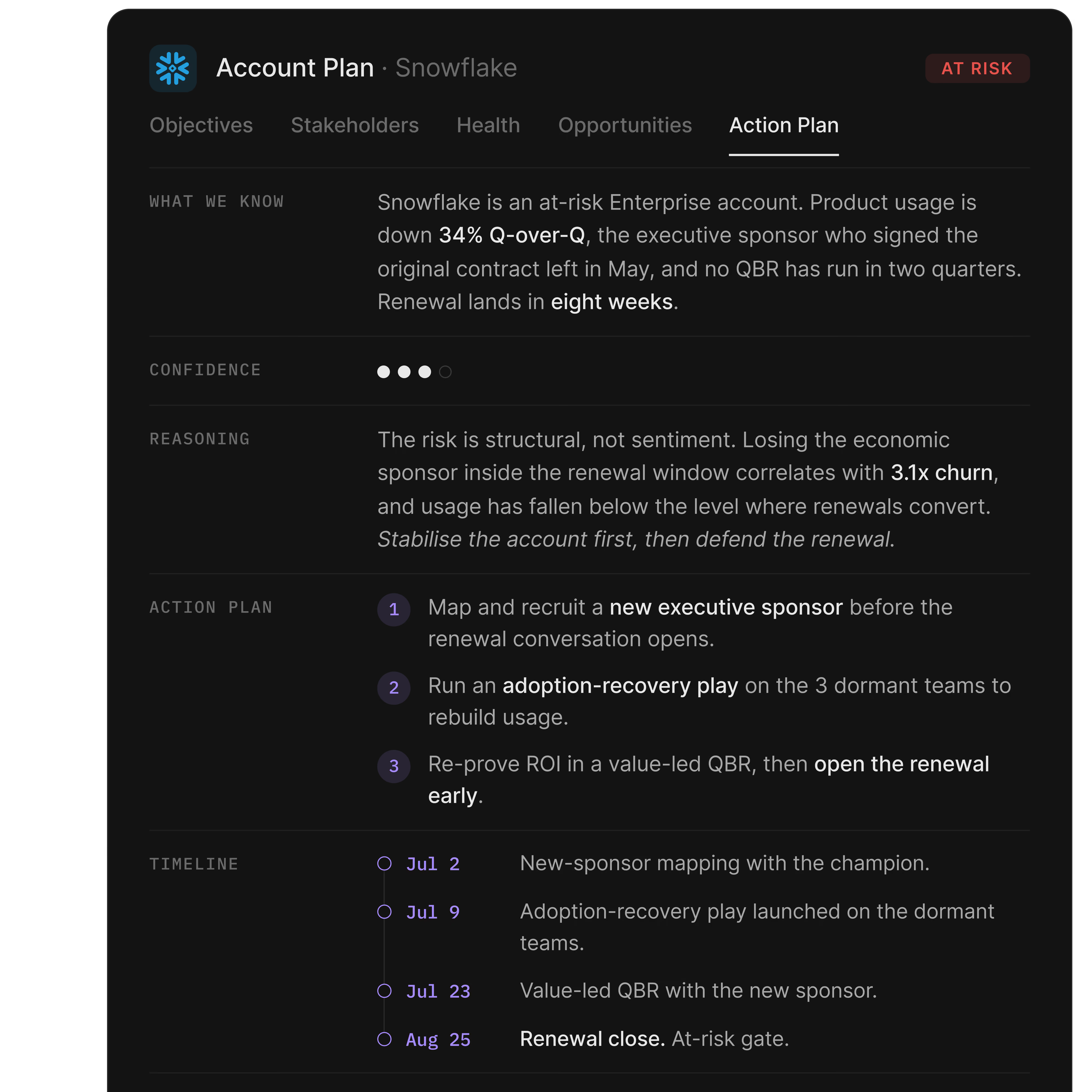
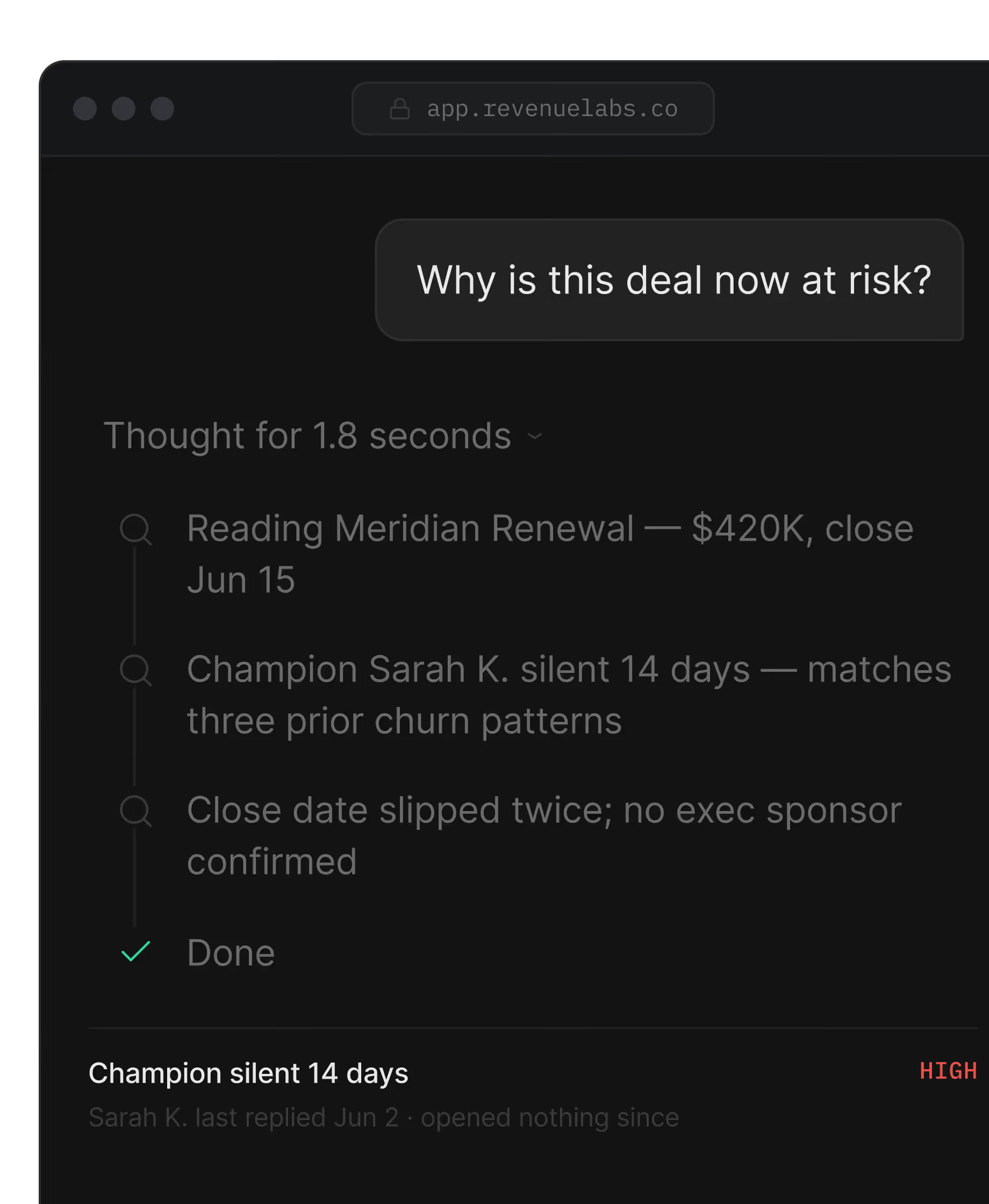
A strategic account's product usage falls by a third over six weeks, and the champion stops accepting meeting invites. Two quarters before the renewal date, the agent surfaces the account to the CSM with the timeline, the reasoning, and the recommended first move.

Learn about Context →
Organizational MEMORY

Connect CS teams and agents to the combined understanding of why customers stay, expand and leave.

Codify which customers retain, what drives expansion, and which signals precede churn. An encoded single source of truth on your customer base, accessible to your CSMs and AI.

>
Retention and expansion patterns derived from your renewal outcomes
>
Understand which onboarding, adoption and engagement behaviors predict the customers that stay
>
Know which signal clusters preceded previous churn, and which preceded expansion
In Practice

The system learns that the accounts you lost over the last two years showed the same sequence: usage decline, a champion exit, then silence from the executive sponsor. Any live account starting that sequence is flagged the week it begins, not the quarter it ends.

LEARN ABOUT Memory →
CODIFIED SKILLS

Surface the customers at risk, the companies ready to expand, and the next step on each.

Agents proactively monitor every customer, weigh the signals against your retention and expansion patterns, and surface the accounts that need action now, with the reasoning attached.

>
Prioritize accounts on reasoned risk and opportunity, not a single lagging score.
>
Enhance CSM judgment with agent reasoning: what changed, why it matters, and what to do about it.
>
Route executive risk to the right people, so a wobbling strategic account reaches the exec sponsor before the QBR, not after.
In Practice

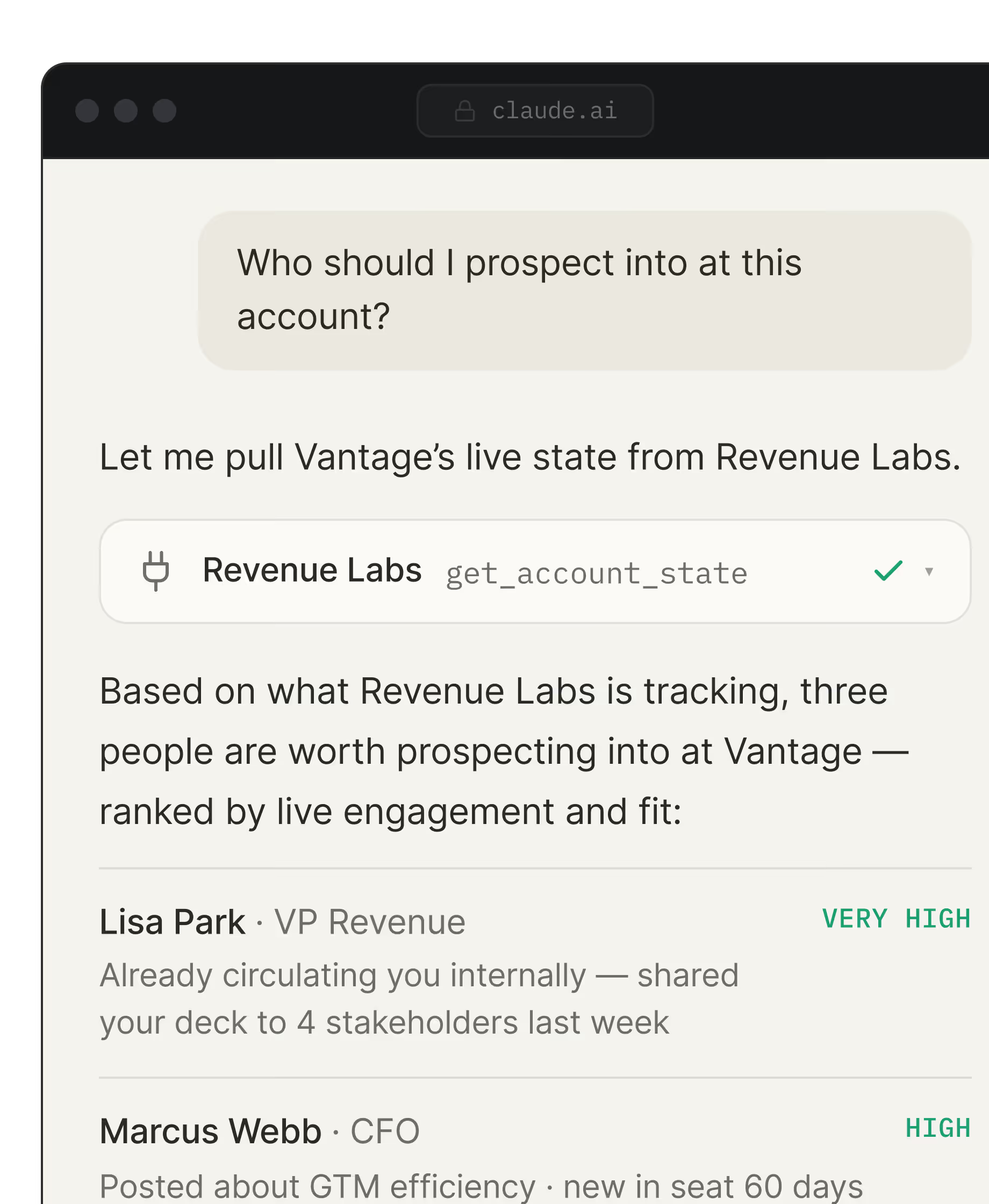
Three expansion signals on a mid-market account: two new teams activate the product, the champion asks about enterprise features on a support call, and the company announces a funding round. The agent surfaces the expansion play to the CSM, with the stakeholders to engage and the value map to lead with.

LEARN ABOUT SKILLS →
customer success agent

Build agents that own the busywork, and enable CSMs to focus on their customers.

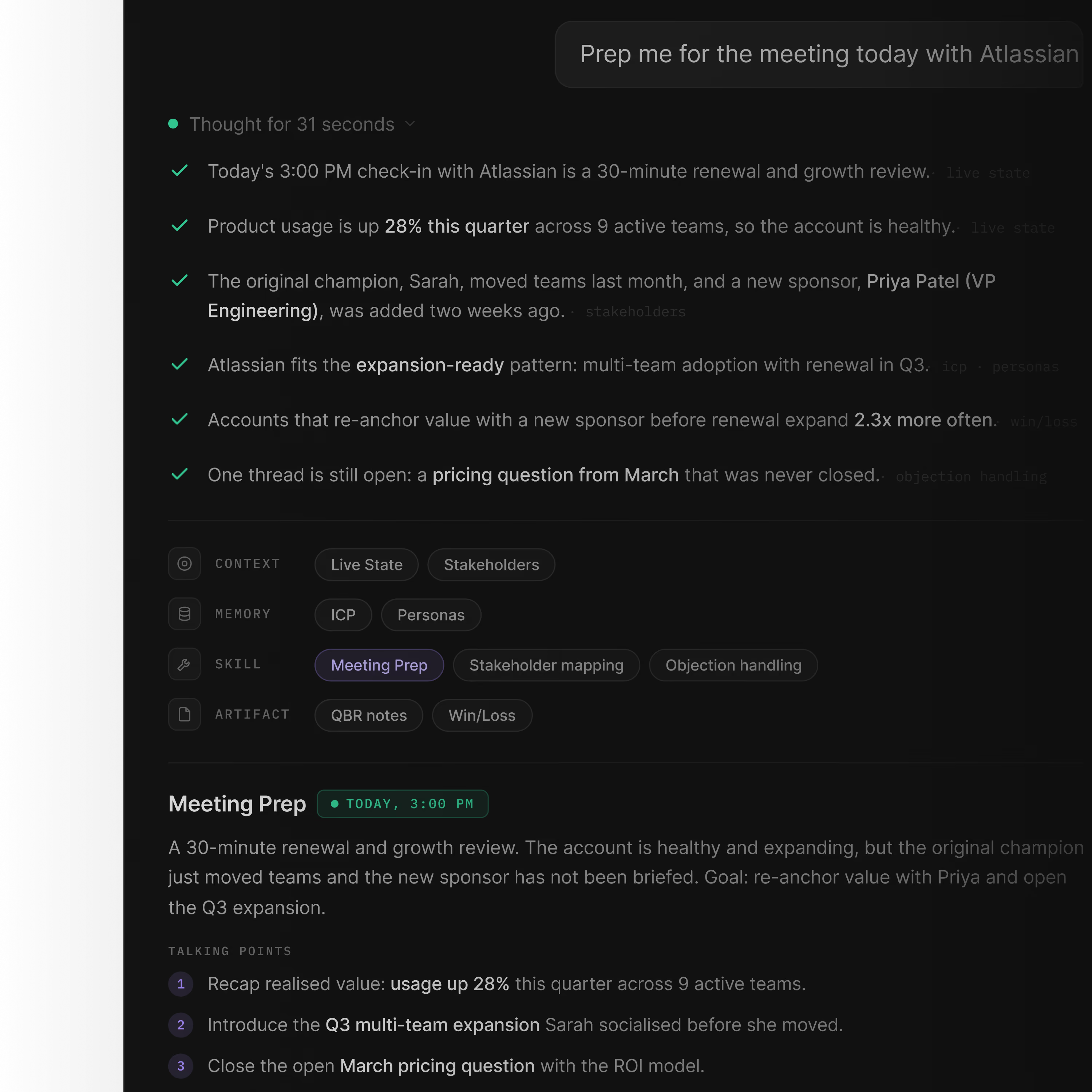
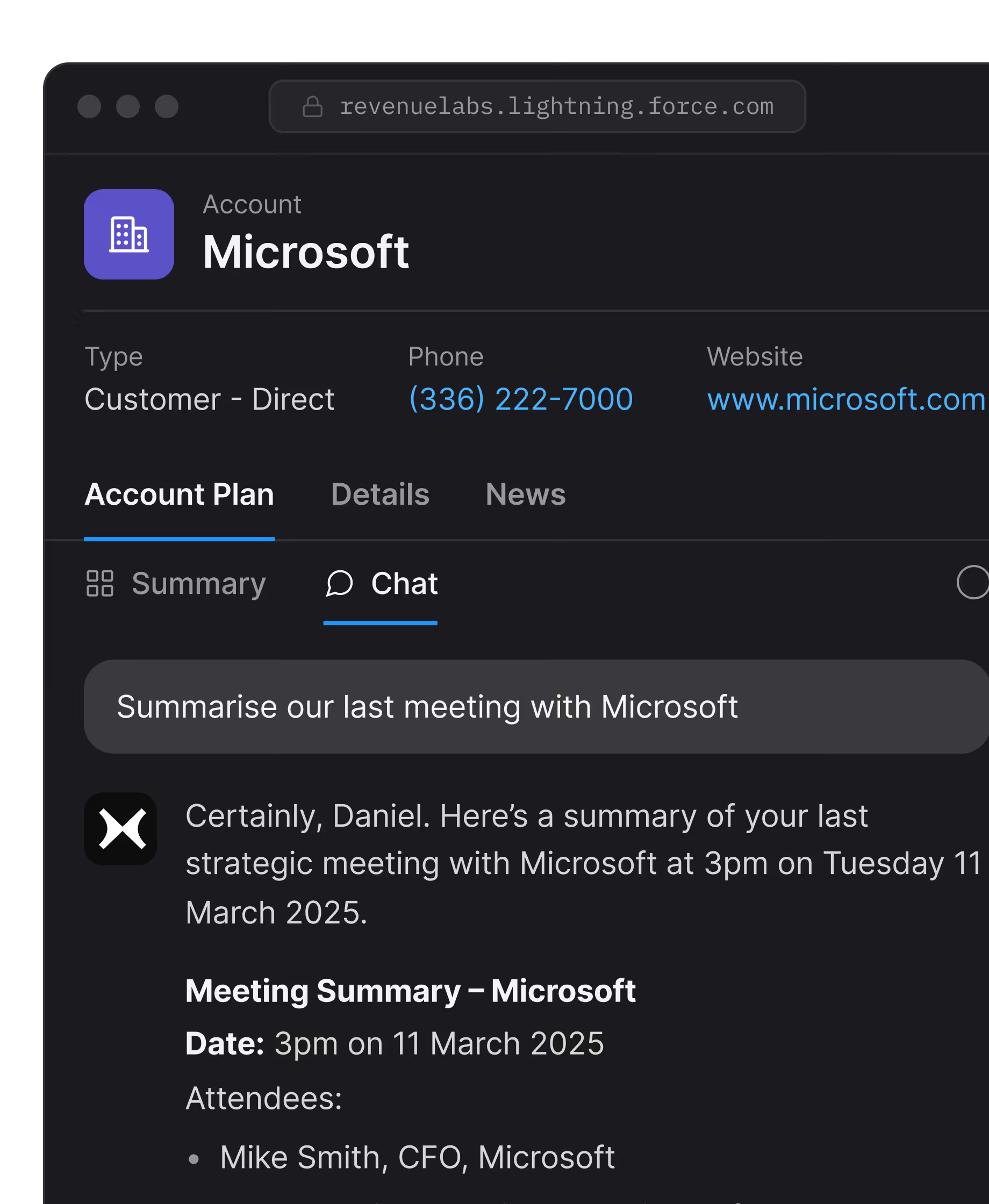
Surface the next best step where CSMs already work. Prep for meetings, deliver QBRs, and address support tickets.

Agents handle the admin, QBR prep and chasing down tickets, so CSMs spend their time with customers, not in systems.

>
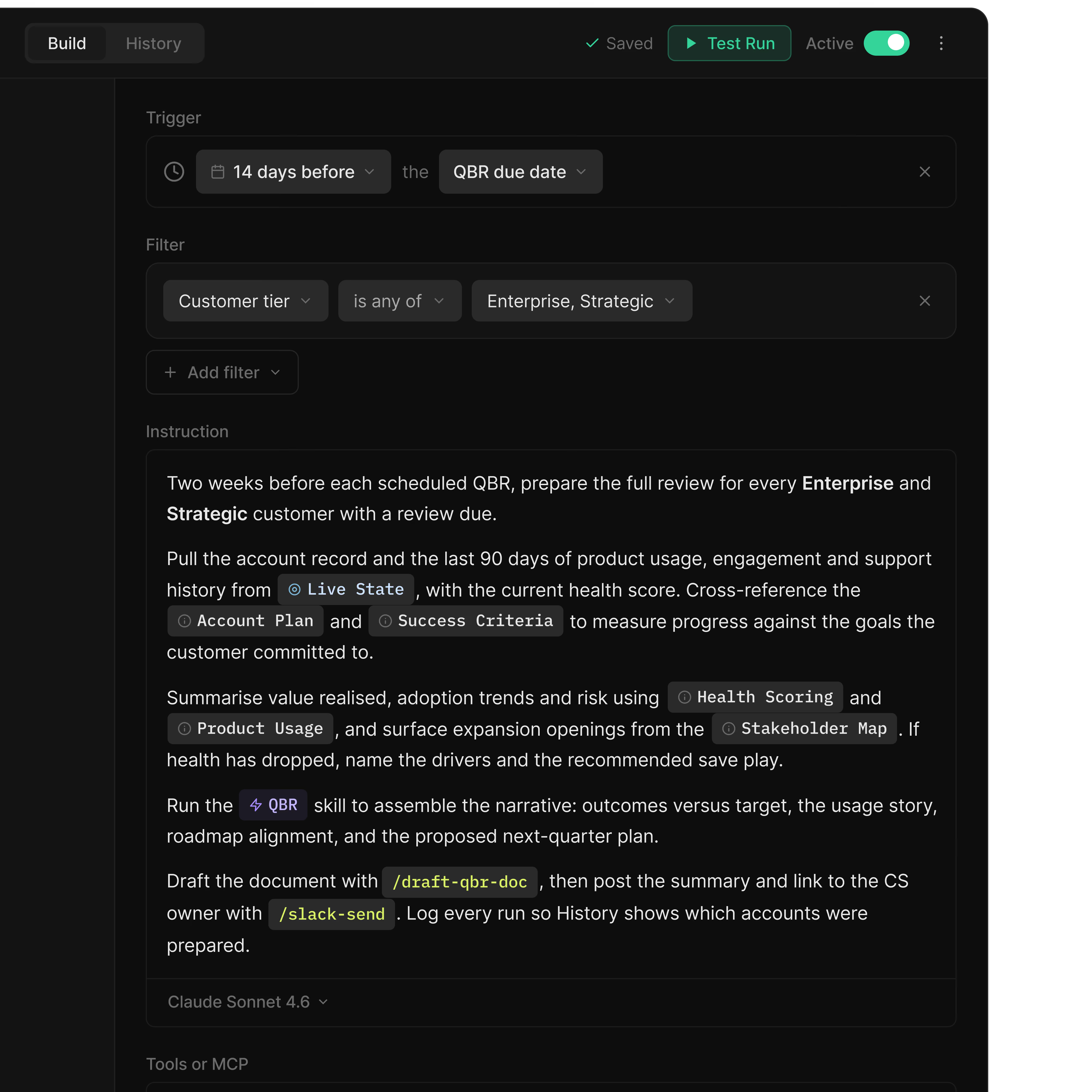
Automated account summaries, QBR prep and renewal briefs, ready before the meeting.
>
Agents keep the record current: notes, fields, opportunities and handoff docs write themselves.
>
Executive risk routed with a full brief: the history, the revenue at stake, and the recommended play.

In Practice

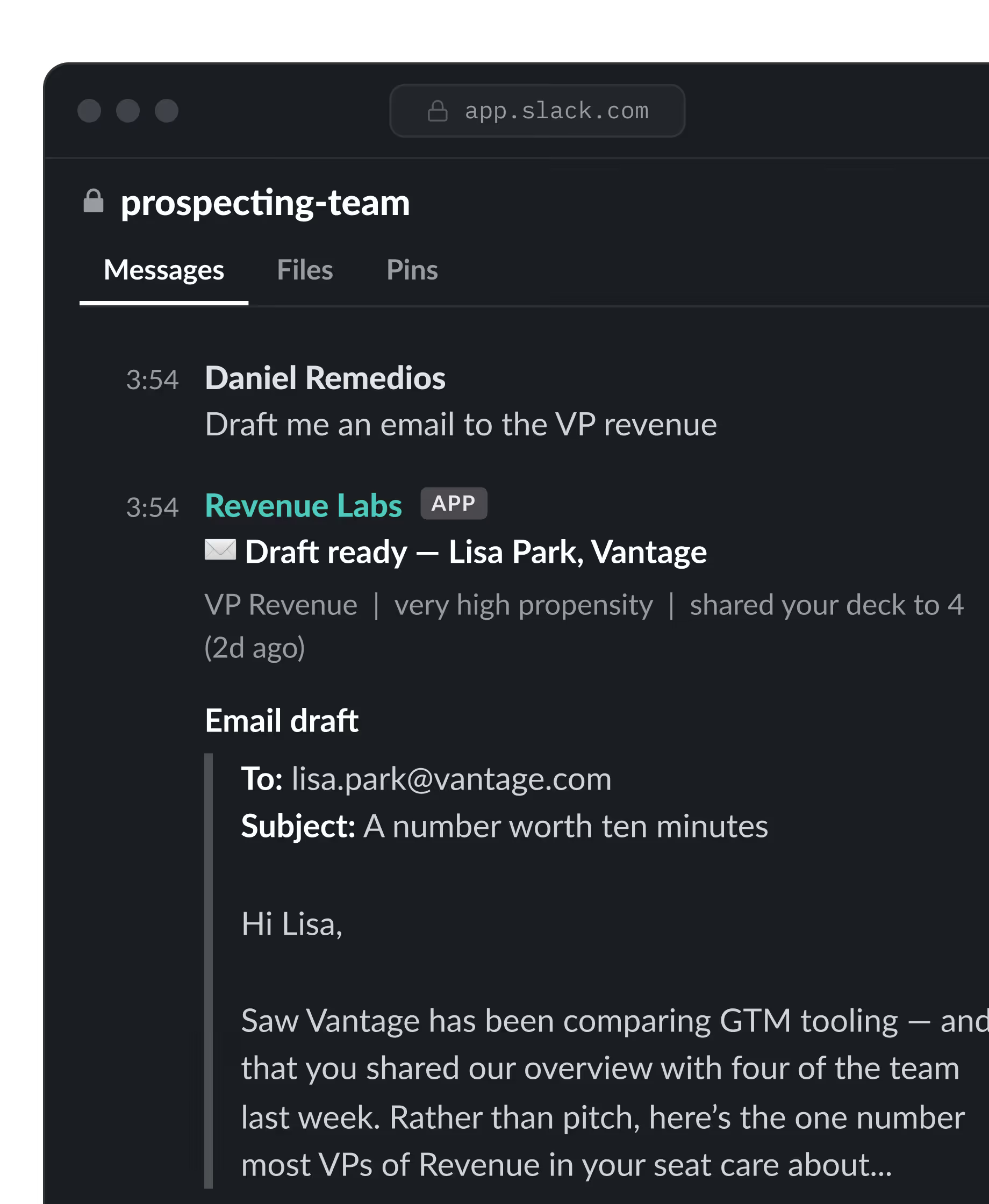
A top priority customer shows renewal risk and the executive sponsor has gone quiet. The agent routes an alert to your CRO with the full account history, the revenue at stake, and a drafted note for the peer-to-peer reach-out. The CSM never had to escalate. The system did.

Learn About Agents →
learning

Every renewal makes the whole GTM smarter.

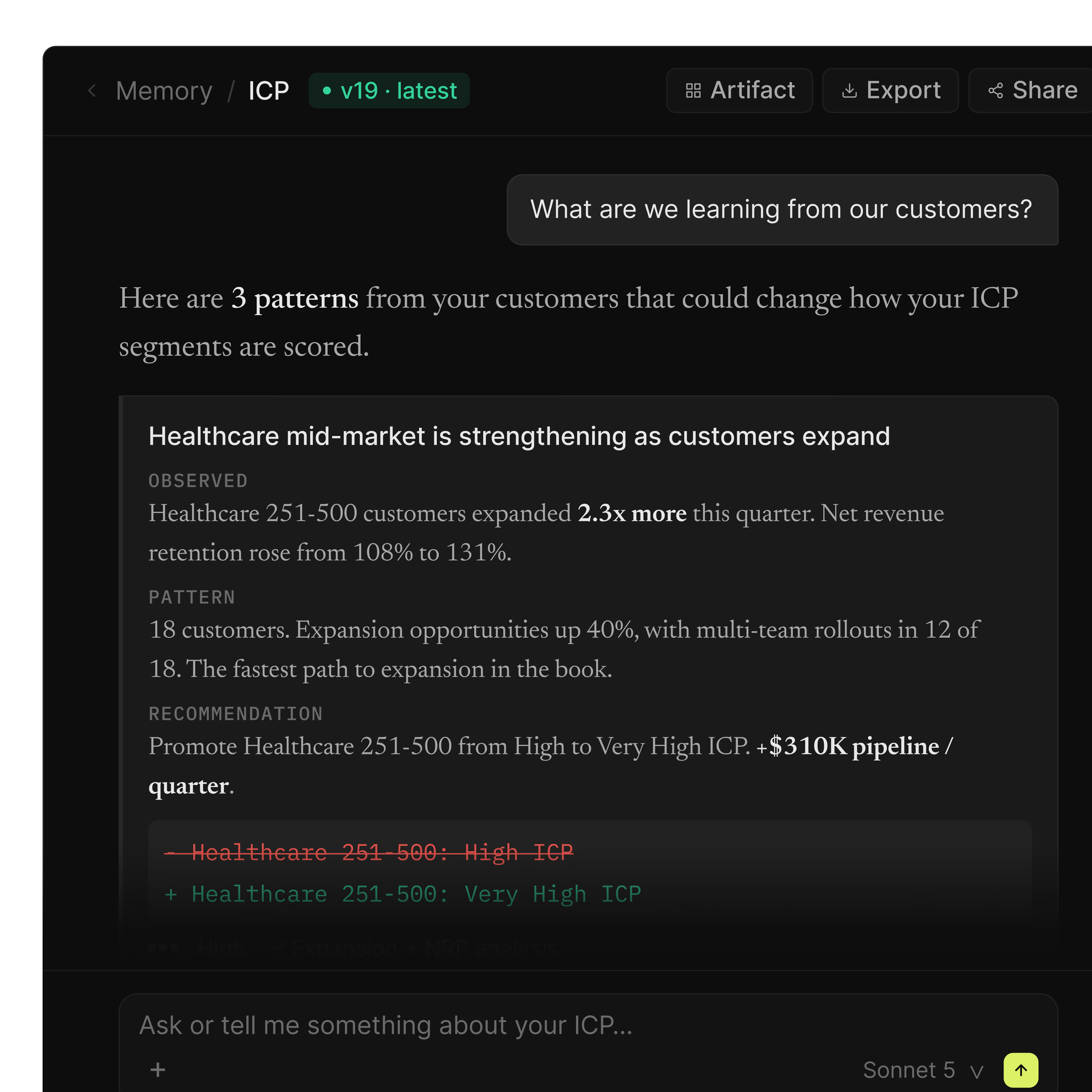
Your retention motion sharpens with every renewal saved, every expansion closed, and every account lost. And because customer outcomes are the highest-quality signal your GTM produces, the learning flows upstream: the customers who stay redefine who sales targets next.

>
Memory evolves with every renewal, expansion and churn, refining the next risk call and the next expansion play.
>
Retention patterns feed targeting: prospecting learns which accounts become the customers that stay.
>
Agents recommend the playbook upgrades, and why; you control what changes.
In Practice

The system observes SME accounts close at a high-volume, but rarely renew past the first year. Learnings feed into ICP memory shared with Sales + Prospecting, de-prioritizing SMEs that yield much lower lifetime value.

Explore Learning →

HOW REVENUE LABS ENABLES SMARTER CUSTOMER SUCCESS TEAMS

TryHackMe

"The renewal used to be the first time we found out. Now usage dips, a sponsor changes roles, and it's flagged with the evidence and a play while there's still a quarter left to act.

My CSMs stopped digging through Salesforce and support tickets to prep QBRs. The system drafts them, and they show up knowing more than the customer expects."

90d

earlier churn signals

+45%

CSM capacity

3.5x

expansion pipeline

ONE SYSTEM, EACH DEPARTMENT, EVERY AGENT.

RevOps connects each GTM team to one system that shares knowledge, coordinates agents, and learns from every customer + prospect outcome

Target more of the customers who stay. Reveal accounts entering market, route them into the right channel, and learn which messages drive outcomes.

90dearlier churn signals

What You Get

Detect buying signals that reveal accounts entering market, scored against the customers who actually retain and expand.

Build dynamic segments, campaign angles and artifacts from live customer + prospect context.

Route accounts into channels, alert sales when in-market, and learn which messages are driving outcomes.

EXPLORE MARKETING →

The customers who stay tell you who to find next. Live context on thousands of high-fit prospects, then know which are in-market, why, and which message will land.

7xpipeline velocity

BUILD MORE PIPELINE

Proactively monitor thousands of high-fit accounts, scored against the customers who actually retain and expand.

Agents draft emails, call scripts and messages aligned to the prospect's pains.

Route the best accounts through to your reps at the right time, with the recommended path to booking a meeting.

Explore PROSPECTING

Every deal is worked with the knowledge of what the last 1,000 taught.

3–5xconversion rates

CLOSE MORE DEALS

Equip every rep before and after meetings, and carry what the deal learned into the account CS inherits.

The system preps every rep before the meeting and captures the lesson after. Coaching becomes infrastructure.

Turn every meeting into a lesson the whole team improves from, not just the rep in the room.

Explore DEALS

Reveal expansion opportunities and renewal risk as they emerge, then route to your best rep with the evidence why.

200%conversion lift

What You Get

Monitor adoption and risk continuously, with customer state evolving with signals from product, engagement + stakeholder changes.

Trigger cross-sell and upsell plays based on proven expansion signals.

Route executive risk as it emerges, and learn from every renewal and expansion.

EXPLORE CUSTOMER SUCCESS →

Enterprise trust

Your revenue data never trains our models, and every agent action is logged so you can prove it.

See our security + trust →

Certified against

ISO 27001:2022

GDPR

CCPA

Data Protection Act 2018

SEE WHY REVOPS + CS LEADERS CHOOSE REVENUE LABS

The GTM teams that learn fastest will win.
Build CS a system that learns.

See what AI-native Customer Success looks like.

FAQ

How Customer Success Runs in an AI-native GTM System.

If it's not here, we'll answer it live.

Talk to us
My CSMs spend too much time in Salesforce, digging through old records and support tickets. Does this fix that?

That is exactly the work it removes. Agents assemble the live state of every account continuously: the history, the open tickets, the usage trend, the last conversation, the commitments made. A CSM opens a current, reasoned summary instead of doing archaeology across records. Opportunity creation, field updates and notes happen automatically. The hours come back as customer time, which is where the 45% more capacity figure comes from.

How does the AE to CSM handoff work?

With one source of truth. The system has been building the account's context since the first outbound touch: why they bought, who championed it, what was promised, which objections came up, and what the AE committed to. At handoff, the CSM receives the full picture, not a hurried call and a half-filled record. Nothing gets retyped, nothing gets lost, and the customer never has to tell their story twice.

Can it alert us in real time when a renewal is at risk?

Yes. Risk is a live state, not a quarterly review item. The system reads usage drops, stakeholder exits, sentiment shifts in support tickets, and unanswered emails as they happen, and surfaces risk the week it forms, with the reasoning and the recommended play. You get a live picture of customer satisfaction built from actual activity, not from survey responses. And when the account is strategic, executive risk routes straight to the exec sponsor with a full brief.

How is this different from the health scoring we already have?

Health scores record. They don't reason. A score built on configured thresholds tells you a number moved; it can't tell you why, whether it matters for this renewal, or what to do next. Revenue Labs produces an explanation and a next step: what changed on the account, what pattern it matches from your own renewal history, and the recommended play. Your score can stay. The reasoning layer above it is what's been missing.
Our churn is already low. What would we get from this?

Two things. First, expansion: the system identifies upsell and cross-sell opportunities from the signal patterns that preceded your previous expansions, instead of waiting for the customer to ask. Second, the learning: which customers retain, expand and advocate is the highest-quality signal your GTM produces, and it improves targeting and qualification upstream. Low churn doesn't make your retention data less valuable. It makes it the standard the rest of your GTM should be aimed at.

How does it identify expansion opportunities?

From your own expansion history, not a generic playbook. The system learns which expansion signals preceded the accounts that expanded: new teams activating the product, feature-limit questions on support calls, hiring in the buying team, funding announcements, a champion promoted. Live accounts showing the same signals are surfaced to the CSM with the stakeholders to engage and the value map to lead with, before the customer asks.

How long does setup take?

Days, not quarters. Standard connectors, live state on every account and the first artifacts are running in the first week. The customer success agent is running inside two. By week four, agents are orchestrating across your GTM. No data warehouse to stand up. No model to train from scratch. No CSM workflow change on day one. The system starts learning from your renewals the moment it's connected.

We'd be buying this for prospecting and deals. What does customer success add?

Different use cases, same operating layer. RevOps builds the customer success motion from the same system that runs prospecting and deals: same context, same memory, same agents, same learning loop. And CS is where the loop closes. Renewals and expansions are the ground truth of your entire GTM; they are what tells the system which accounts were worth winning. Run the layer without connecting customer success and you leave your best signal on the floor.

Will my CSMs actually use this?

They adopt it because it removes work, it never adds it. Health assessments assemble themselves. QBR prep arrives ready. Expansion alerts land in Slack with the reasoning attached. Records update without anyone typing. There is no new login and no new dashboard; everything surfaces where CSMs already work, in Salesforce, in Slack, in the inbox. Any tool that adds workflow steps to a CSM's day deserves the resistance it gets. This one gives the day back.