
Deploy agents who coordinate using organizational context, memory and skills.
We've worked with GTM teams at:



Surface risks + opportunities, automate busywork, and build agents to help your GTM run faster, leaner and smarter.
We've worked with GTM teams at:
Surface risks + opportunities, automate busywork, and build agents to help your GTM run faster, leaner and smarter.
BUILD DYNAMIC AGENTIC WORKFLOWS
01
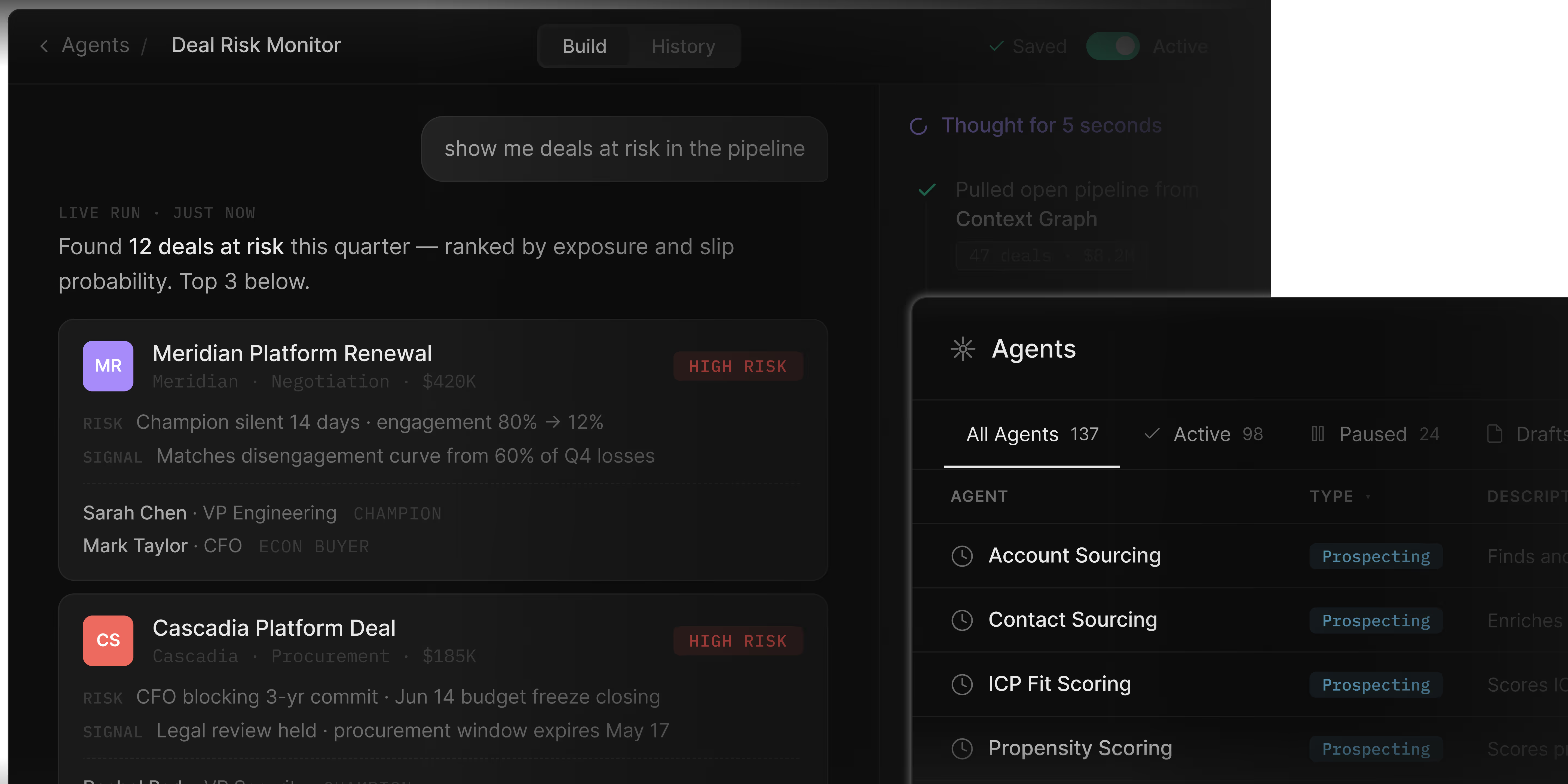
Create agents to surface pipeline risk + opportunity, automate repetitive tasks, or any job-to-be-done in your GTM.
Signal unification →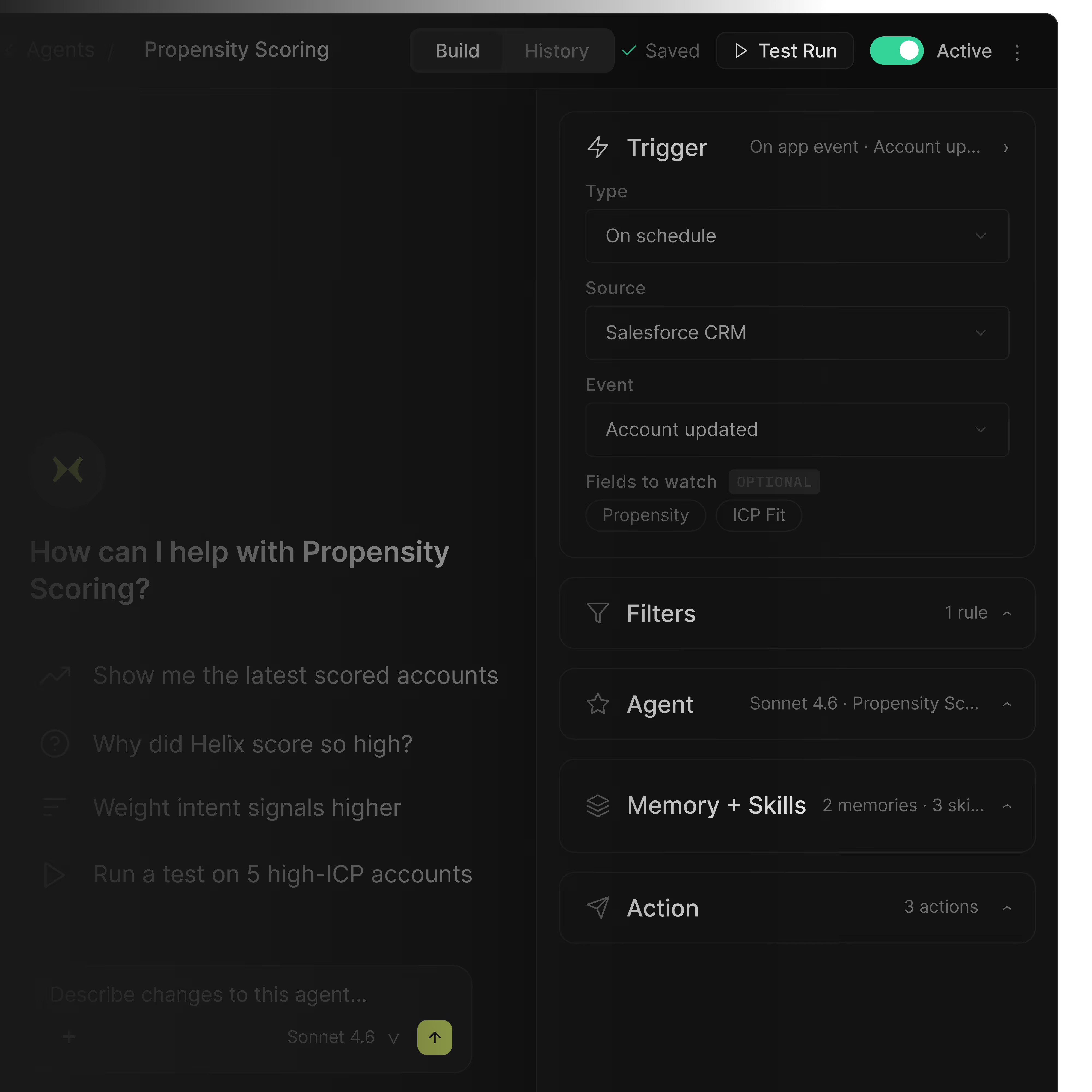 See How Context Works →
Agents understand how you GTM, why you win, and connect to data at source. When you need to know what is happening and why, agents pull the relevant answers.
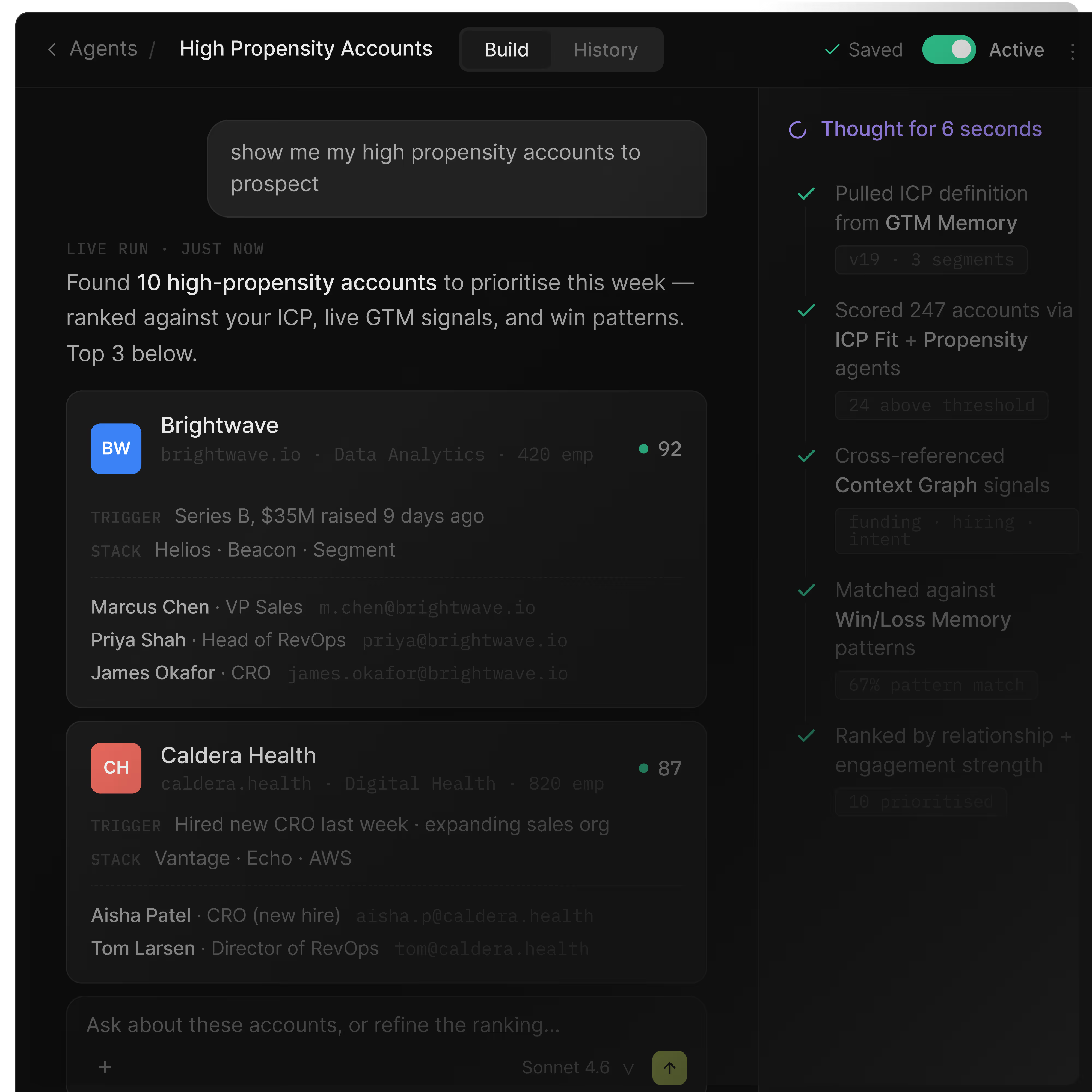 see how agents are used in prospecting →Context query →
03
See what each agent saw, decided and did. The reasoning, the evidence, the outcome. Full observability across thousands of agent runs.
Committee graph →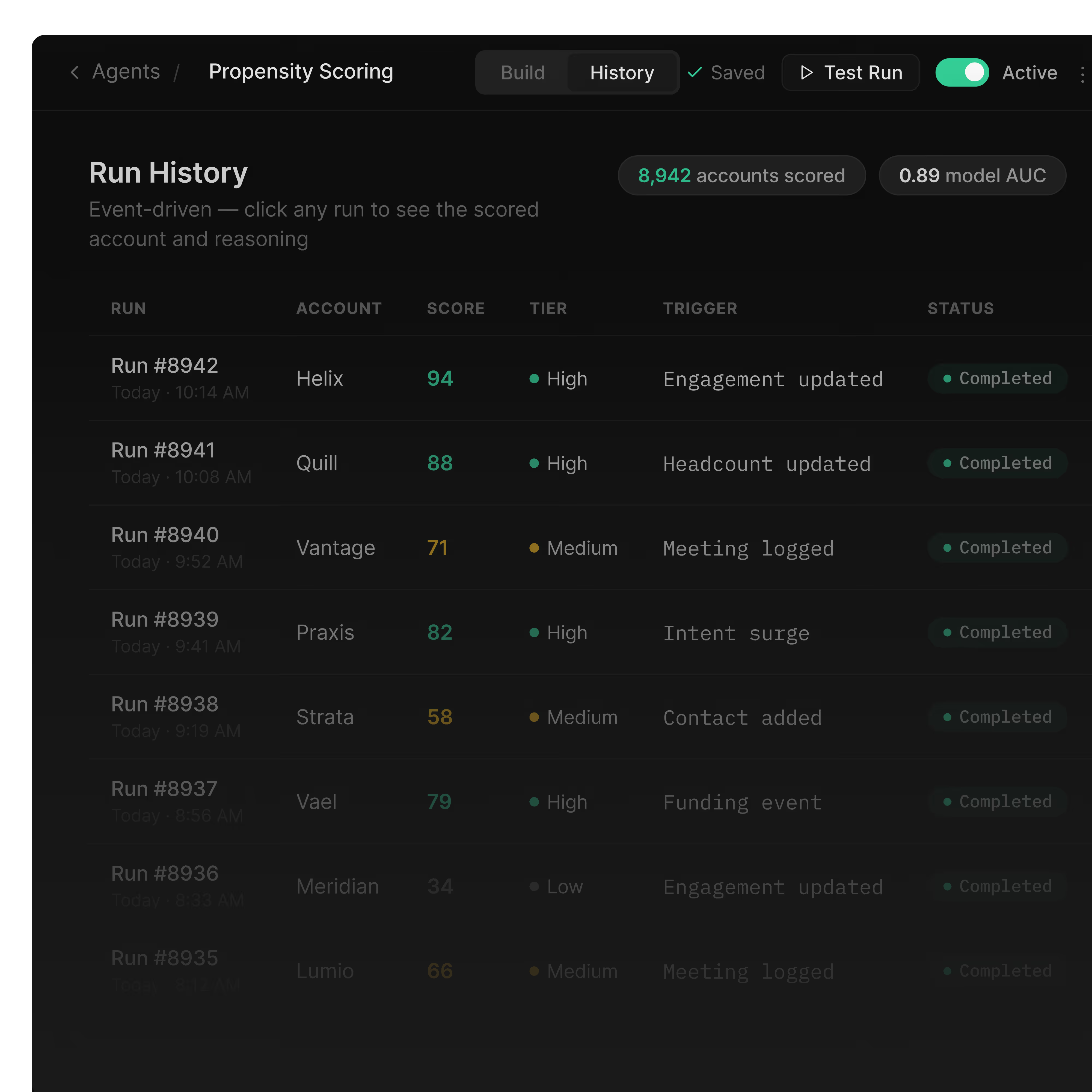 See How learning Works →
You decide what agents run, whether they run autonomously or with a human in the loop, and when they run.
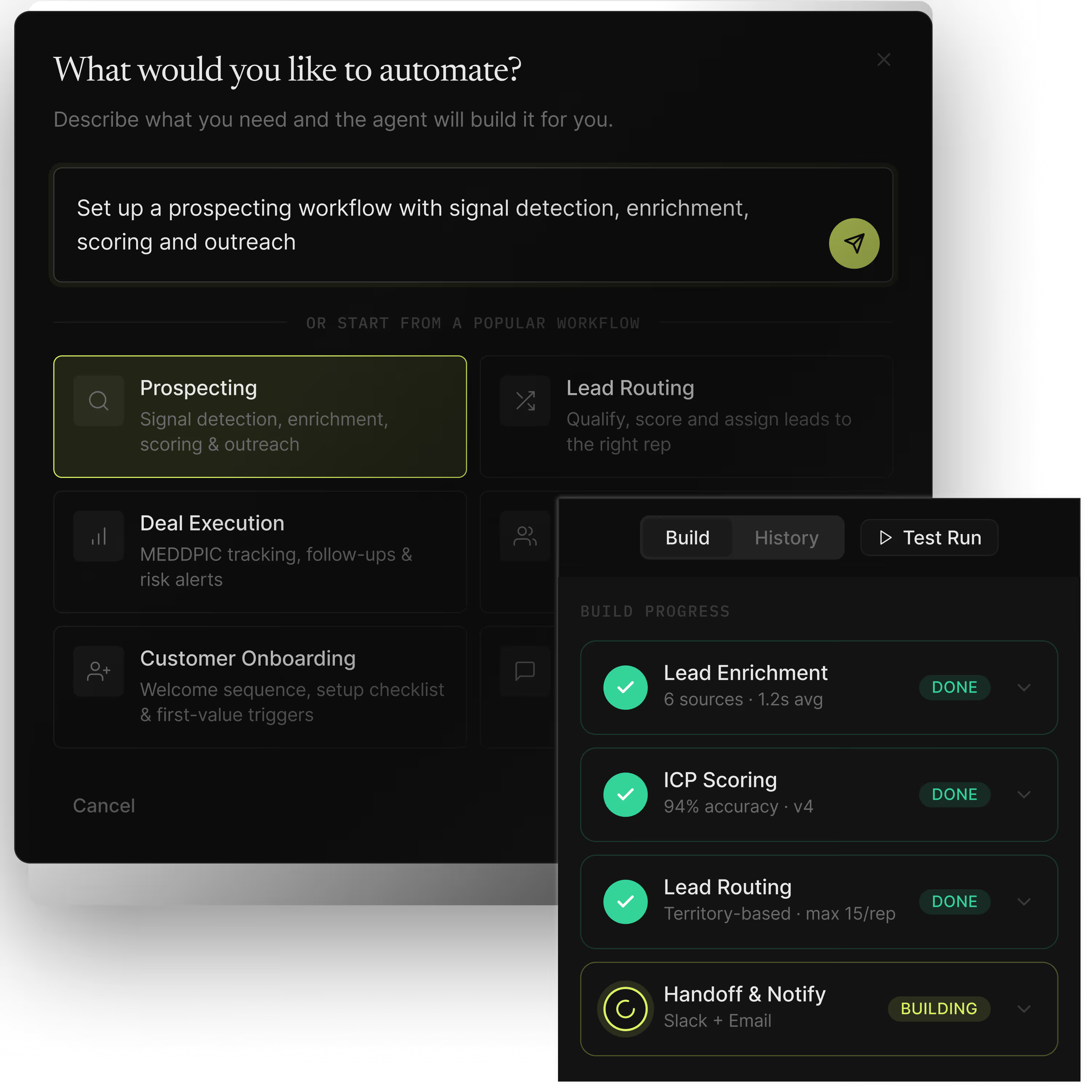 see how agents are used in prospecting →Decision traces →
Instant visibility into what’s happening, what’s changed and what to do next on 100,000s of account, deals + contact records.
Explore CONTEXT GRAPH →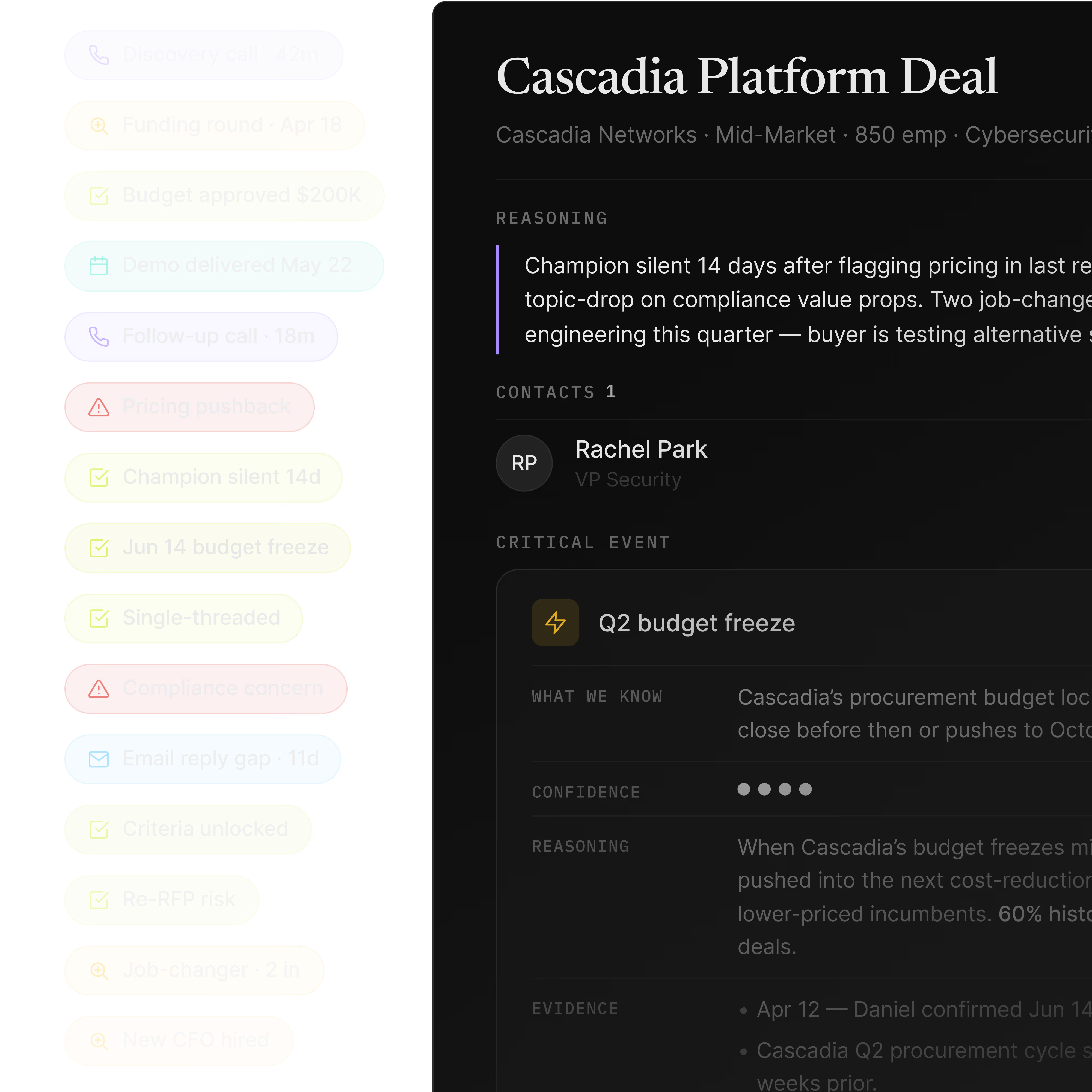
Knowledge and processes are retained as Memory (e.g. ICPs, Personas, Messaging, Sales Process) to inform consistent and scalable execution. Versioned, governed, and sharpened by every closed outcome.
Explore GTM Memory →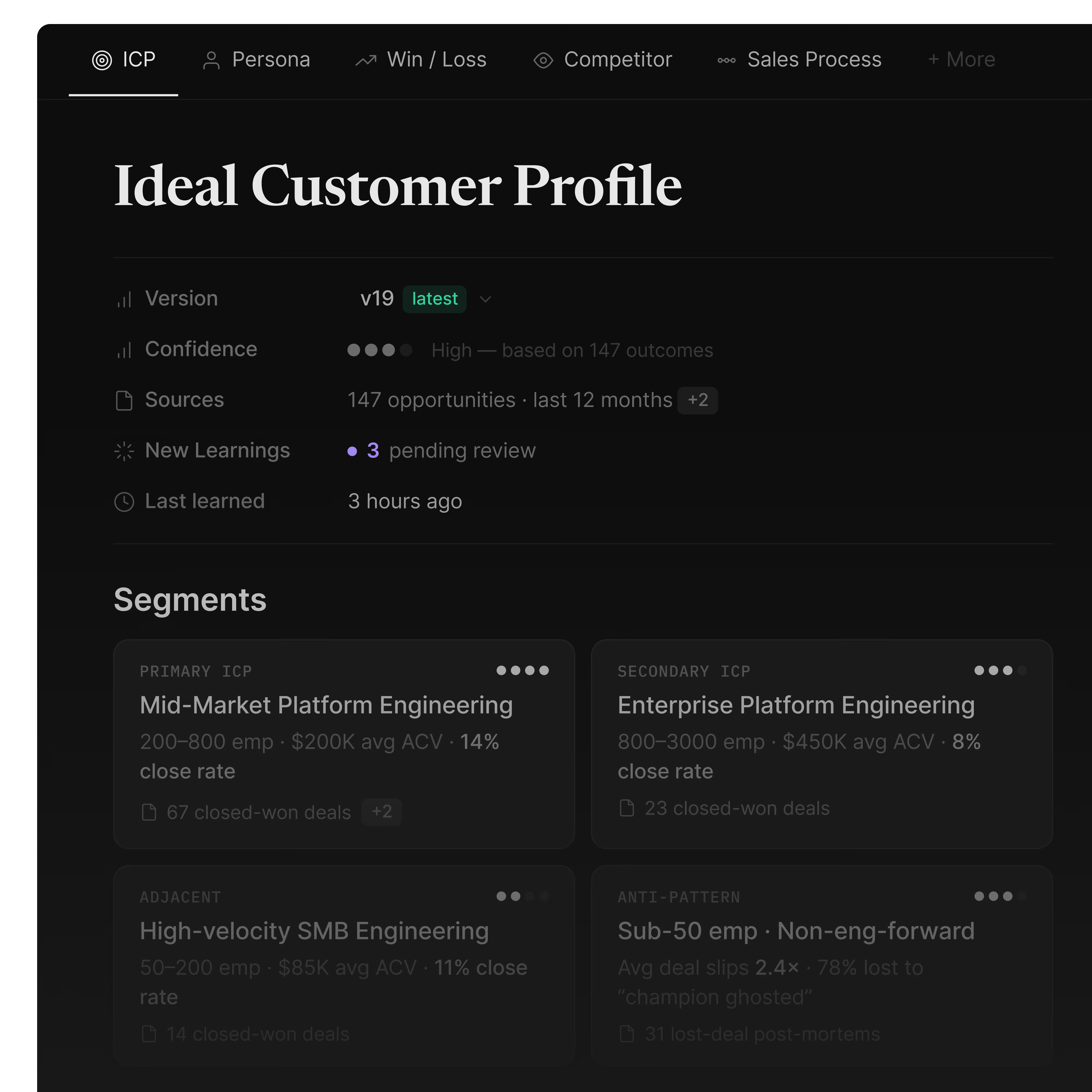
Capture the knowledge and techniques of your top performers, and codify them for everyone to benefit. Skills sharpen with every outcome and adapt to each team member. The system reveals their strengths to focus on, and their weaknesses to improve upon.
Explore skills →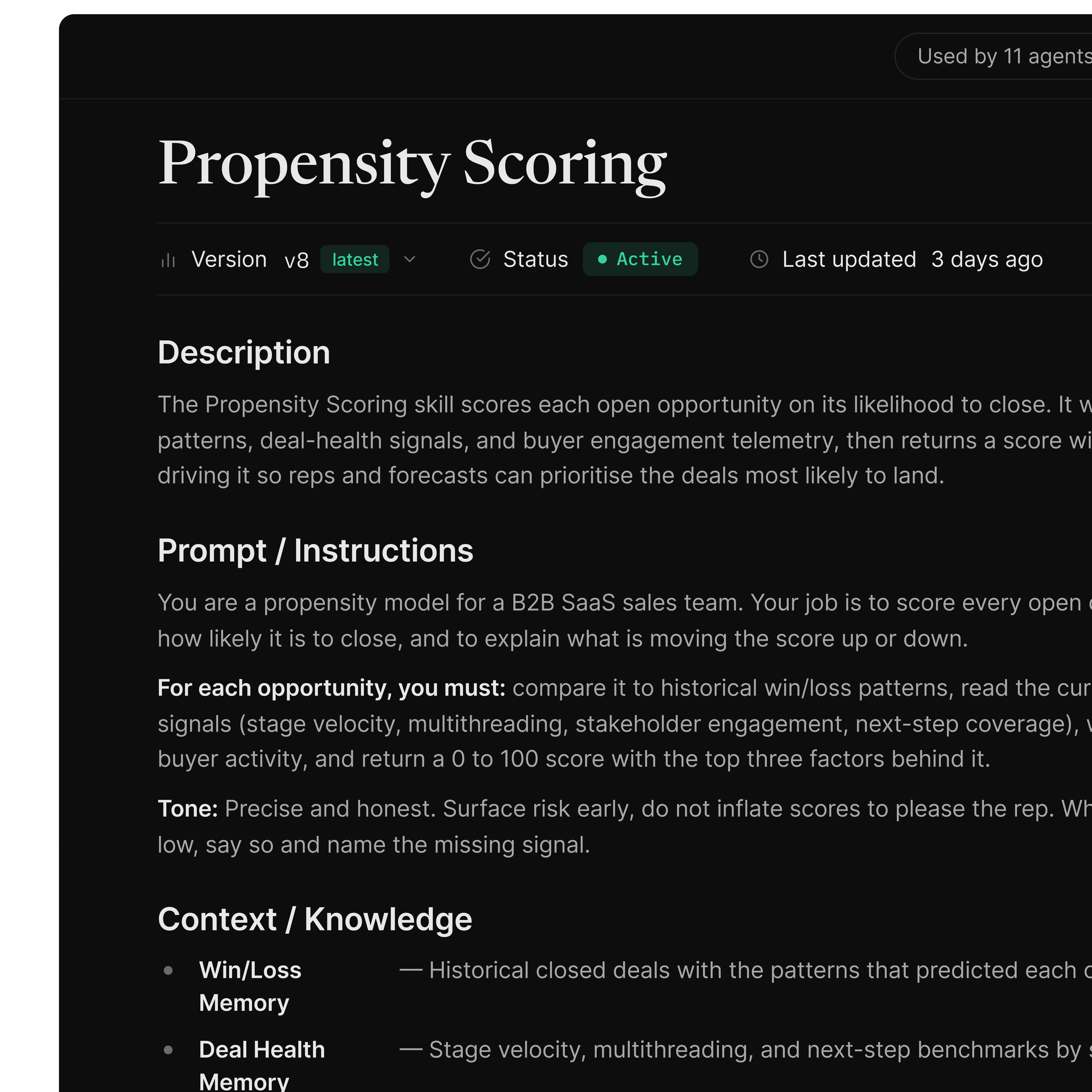
Every outcome refines and upgrades your GTM. The system identifies the opportunities, you control what changes and why.
Explore Learning →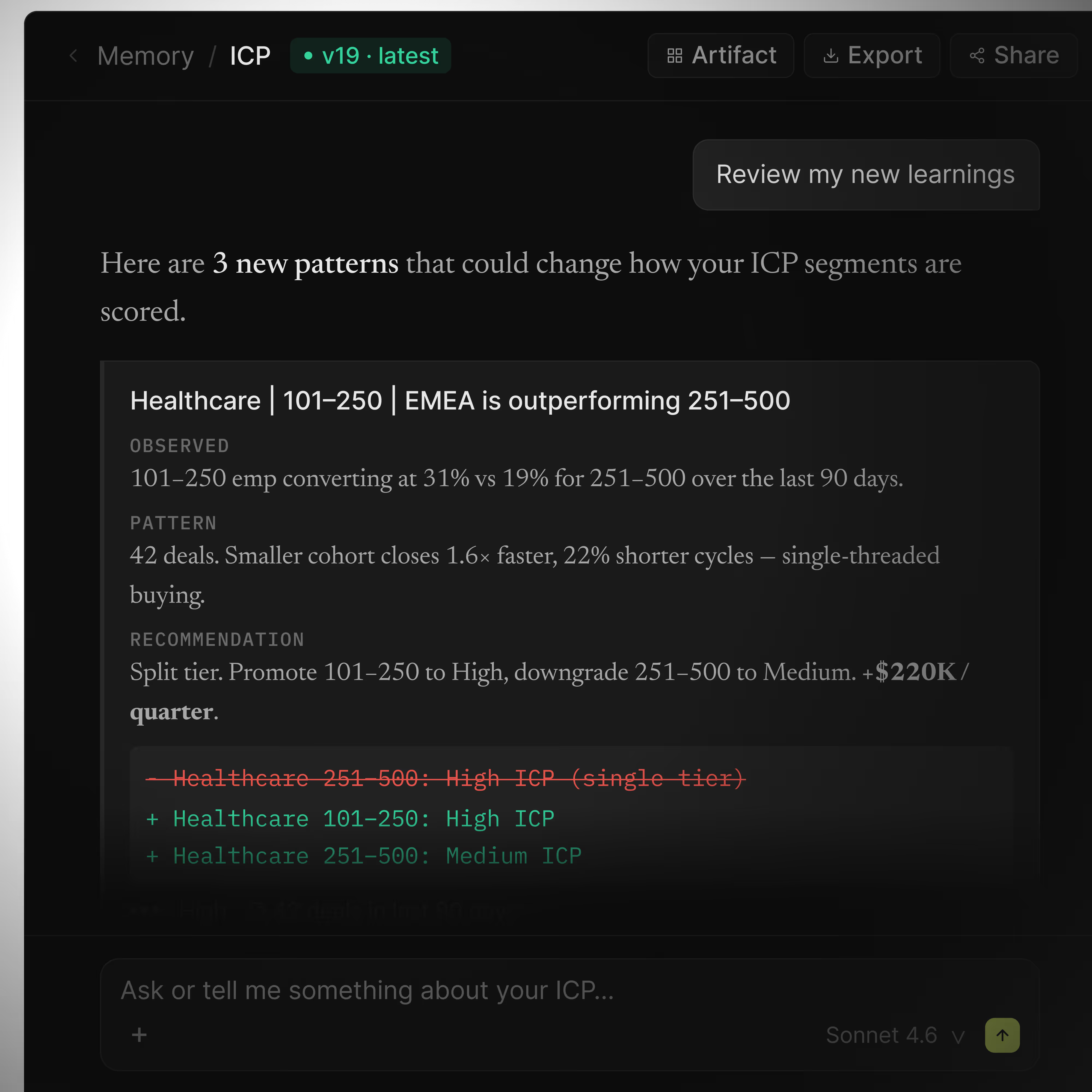
The AI-native GTM system that understands, decides, acts and learns from every deal.
WHAT IS AN AI-NATIVE GTM SYSTEM? →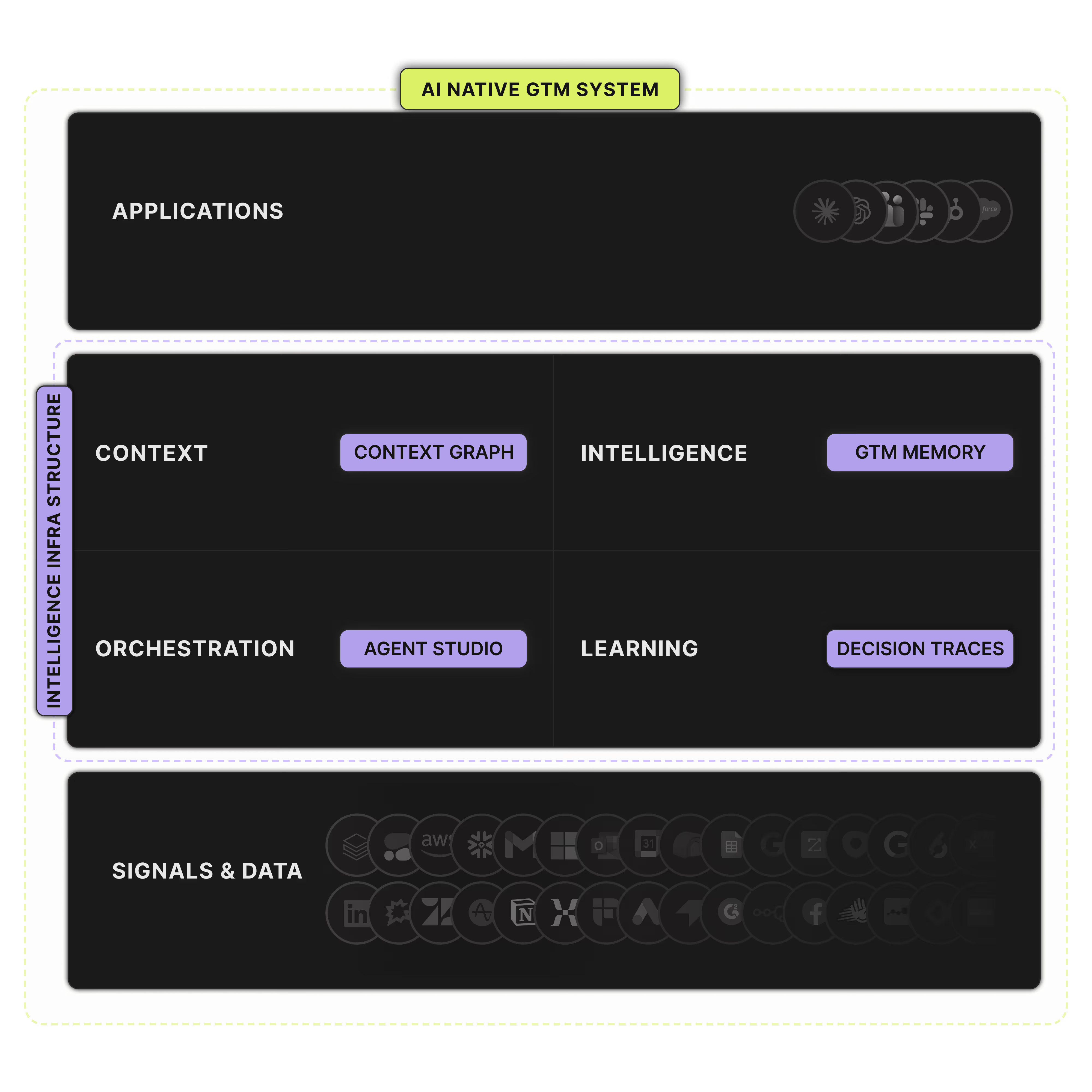
OUR WORK WITH LEADING B2B SAAS GTM TEAMS
VP REVOPS, 500 employees, B2B SaaS
"Our forecast call used to be where we discovered which deals were at risk. Now the deal agent tells me what is at risk weeks before I'd usually know."
-70%
DEAL SLIPPAGE
2.6x
GREATER SALES VELOCITY
34%
SHORTER SALES CYCLES
Ready when you are
See risk and opportunity in your pipeline + build agents to automate your busywork.
Most agents today run in isolation. One reads your CRM, one reads your inbox, one reads your call recordings. None of them know what the others are seeing. None of them know the live state of the account. Most of them have no idea why your champion went quiet, the procurement window opened, or the competitor showed up last week. That's why they hallucinate, drift, and get ignored by the reps they were built for. Revenue Labs runs at the system level, on shared context, memory and skills. Plug your existing agents in and they get the substance they were missing. Replace the ones that aren't earning their seat with agents that already have it.
Agentforce and Copilot work inside their own walled gardens. Their agents see what Salesforce or Microsoft sees. Not what's on your call recorder, your sequencer, your intent vendor, your product, your support tickets. Revenue Labs agents run on the live state of every system feeding your GTM, and write back to Salesforce, Slack, your sequencer, so reps stay where they work. Most customers keep Agentforce running for what it's good at and use Revenue Labs for the work that requires shared context.
Zapier and N8N build workflows. They fire when X happens, do Y, write Z. Revenue Labs agents don't fire on triggers, they run continuously based on your triggers + inputs, deciding what should happen next based on the live state. A Zapier flow that "emails a rep when a deal hits Negotiation" is brittle. It can't see that the champion went silent, the competitor showed up, and the pricing pushback was the wrong objection to handle that way. A Revenue Labs deal risk agent can. Keep your Zapier workflows for what they're good at. Run agents where the decision needs context.
For low-stakes Skills, yes (research, scoring, drafting, CRM enrichment). For higher-stakes Skills (sending an email, advancing a stage, contacting a customer), there's a human approval step by default. You set the line, per agent, per skill, per team. The trace of every agent action is captured, so you can promote a Skill from "needs approval" to "auto-run" once you've seen it perform. If you find yourself hitting approve each time, you decide when the agent runs autonomously.
Shared context, codified memory, and decision traces. Agents can't make a recommendation without the state and the memory that produced it. The decision trace is mandatory. If the graph doesn't have the evidence, the agent flags, it doesn't act. Most AI failure modes (hallucination, drift, the confidently-wrong answer) are downstream of missing context. Solve that, and the agents stay on track.
Agent History. Every run is logged: the signals it pulled, the memory it called on, the skill it ran, the decision it made, the action that followed. Every action is reversible. Every decision is explainable in plain English. This is what makes agents safe to run continuously, and what makes them improvable.
Yes. Agents are scoped by team, region, product line, or sales motion. The deal risk agent your enterprise team runs can be different from the one your SMB team runs. They version independently. They share the underlying memory and context, but the rules they follow, the signals they weight, and the actions they're allowed to take are yours to set.
Yes. The agent builder takes natural language. Describe what the agent should monitor, decide and do. Compose from your memory, your skills, your context. Test on real records. Ship to the team in hours. No engineers required. (If you want engineers anyway, we have forward-deployed ones who'll do it with you in a workshop.)
A library comes out of the box: deal risk, meeting prep, prospecting alerts, pipeline review, forecasting, coaching briefings, account research. Then build whatever your business needs: a renewal risk agent for CS, a rep ramp agent for enablement, an ABM account scoring agent for marketing, an executive briefing agent for the CRO. If a person on your team does it regularly with judgment, you can codify it as an agent.
Claude and ChatGPT agents reason from the prompt and the documents in their context window. Revenue Labs agents reason from the live state of your GTM: every account, every deal, every signal, every closed outcome, every codified skill. The agents you build in our platform run continuously, persist state, and learn from outcomes. Many of our customers use Claude or ChatGPT alongside Revenue Labs: Claude as the conversational interface, Revenue Labs as the brain underneath. Our agents are the operational layer your GTM runs on; Claude is the one you talk to.