
Article
v1.0
Faster meeting preparation still needs better commercial context
A quick summary does not establish what changed or what the company has learned. Shared State and operating knowledge give sales capabilities a stronger basis for decisions.

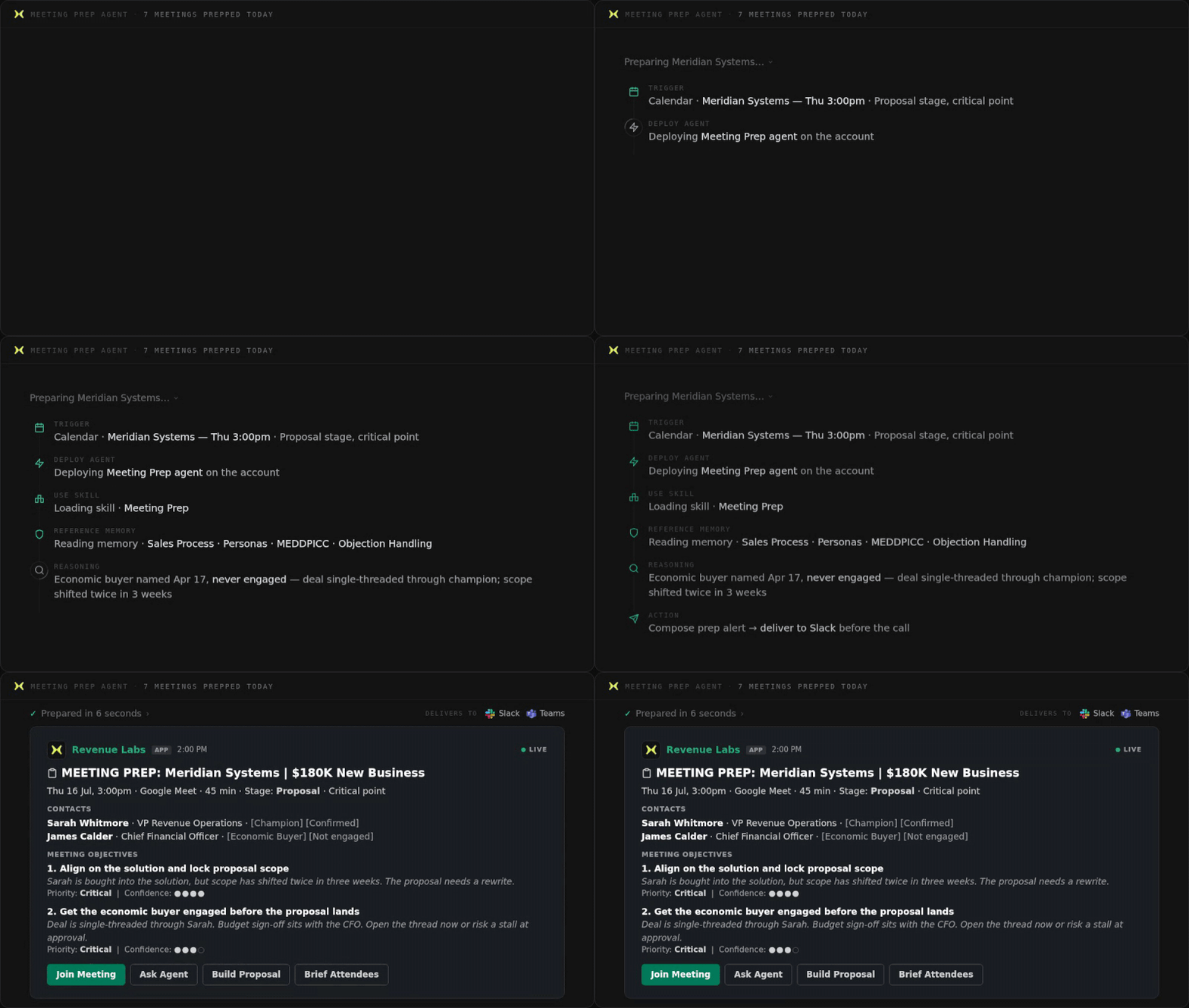
Preparing for a sales meeting has gone from 30 minutes to 30 seconds.
The interesting question is whether it’s actually become any better 👇
A few years ago, meeting preparation meant jumping between Salesforce, emails, call recordings, Slack and documents, trying to build a picture of the account before the call.
Today, connect Claude (or an AI assistant built into your CRM) and that work happens almost instantly.
That’s a genuine step forward.
But it does raise a more important question:
What is the AI actually reasoning from?
Whilst it can summarise the information that’s available, it doesn't continuously understand the commercial situation.
For example, it doesn’t inherently know:
→ what has changed across the opportunity since yesterday
→ whether confidence in the deal should have increased or decreased over the last week
→ which signals actually matter for your business
→ what your organisation has learned from hundreds of similar opportunities
→ how your best enterprise reps prepare for this type of meeting
→ whether the recommendation it made last week actually led to a better outcome
Those aren’t limitations of Claude.
They’re limitations of the operating model we’ve built around AI.
We’re still asking people to coordinate everything:
→ people interpret the signals
→ people remember what worked
→ people connect information across systems
→ people improve the process afterwards
That creates delays. It creates inconsistent performance. And every AI interaction becomes another isolated piece of work instead of improving the organisation itself.
I think this is the next shift.
Commercial organisations need an operating layer that continuously maintains a shared understanding for both teams and AI.
Not just what’s stored in isolated tools, but:
→ what's the live state of every account, opportunity and customer
→ what the company has learned
→ how the company sells
→ how decisions should be made
→ how every interaction should improve the next one
Once that foundation exists, you stop building isolated AI experiences for your sales team.
→ Meeting Prep
→ Deal Risk
→ Pipeline Reviews
→ Sales Coaching
→ Forecasting
→ Account Planning
They’re no longer separate workflows.
They’re all different capabilities built on the same continuously operating and improving commercial system.
Adding AI to sales makes work faster.
Building an AI-native Sales System makes your commercial organisation understand, decide and improve better over time.
And this can be shared across Marketing, Prospecting and Customer Success.
It's the most exciting opportunity in the next era:
A new operating layer for AI-native GTM.
This essay is versioned. Where our thinking develops materially, we will update the version and explain why - the revision history is preserved, not polished away.