Win more deals with smarter, faster, decision-making.

We've worked with GTM teams at:

DEALS

B2B SALES for the AI-era.

Connect Sales teams and agents to the combined understanding of why you win and lose deals. Surface the best next step throughout every live deal. Compound everyone's learning of what works.

The Shift

What if, at the end of the quarter, you didn't have to hit reset?

This is what happens when reps and agents learn from each outcome.

Decision Debt

The compounding cost of decisions made without understanding why they were made or whether they worked. Like technical debt, it compounds silently — every decision the system can’t learn from makes the next one worse.

Learn more about Decision Debt →

01

Falling short of revenue targets

New business unpredictable and expansions unreliable. Hiring more reps, adding more tools, and increasing activity is not leading to the revenue gains forecast.

02

Struggling to find the pipeline

Coverage is never enough, no matter how many signals you have, campaigns you run or leads you prospect. Reps are trapped chasing pipeline instead of closing deals.

03

Knowledge walks out the door

Top performers carry your revenue number, but why they win is locked in their heads. Reviewing their calls tells you what they did, but the learnings fail to translate to the rest of the team.

04

Time wasted not selling

Researching accounts, finding contacts, updating fields and uploading notes - reps spend more time on understanding a deal, than they do on working it.

05

Unable to explain why you win/lose

Call transcripts, e-mail threads, LinkedIn messages, reports + dashboards; you're drowning in signals, but can't explain to the board why deals are forecast.

06

Revenue system is fragmented

Tools and teams don't talk to each other. Multiple sources of truth, conflicting insights. Adding AI only scales the chaos and division.

01

Coach reps to success on live deals

Smarter decisions made during live deals, with guidance from agents knowing the next best action, and capable of demonstrating why.

2x

win rates

02

Surface in-market prospects to AEs

Reps receive prospects when the timing, fit and contact is right. Agents handle the understanding, then handover to your team when it's ready to prospect.

4x

pipeline created

03

Reps + agents know why you win

Codify what works, then surface the right knowledge, at the right time, during the sales process. Everyone knows the best step to take next.

50%

faster new hire ramp

04

Reps sell, agents own the busywork

Account research, CRM updates, message drafting and more. Agents prepare the foundations, whilst reps focus on high-value activities.

+40%

increased rep capacity

05

The system learns from every deal

Every won and lost deal is analyzed. The system understands the context, examines the decisions made, and captures the outcome.

>85%

forecast accuracy

05

Centralize your GTM's knowledge

Millions of signals, thousands of records, hundreds of documents - all codified in a single intelligent GTM system, accessible by teams + agents.

30%

shorter sales cycles

How we do it
Observe

Capture what, who and why it matters across your team's pipeline.

The system connects to your activity at source, capturing meetings, calls, emails, web research and social interactions - building a context graph that maps every the relationship across your GTM.

>
Connect your GTM tech stack — CRM, Call Recorder, Slack or Teams, and more
>
Ingest signals relevant to your GTM across every deal, rep, contact and activity
>
Live, unified context from disparate data sources
In Practice

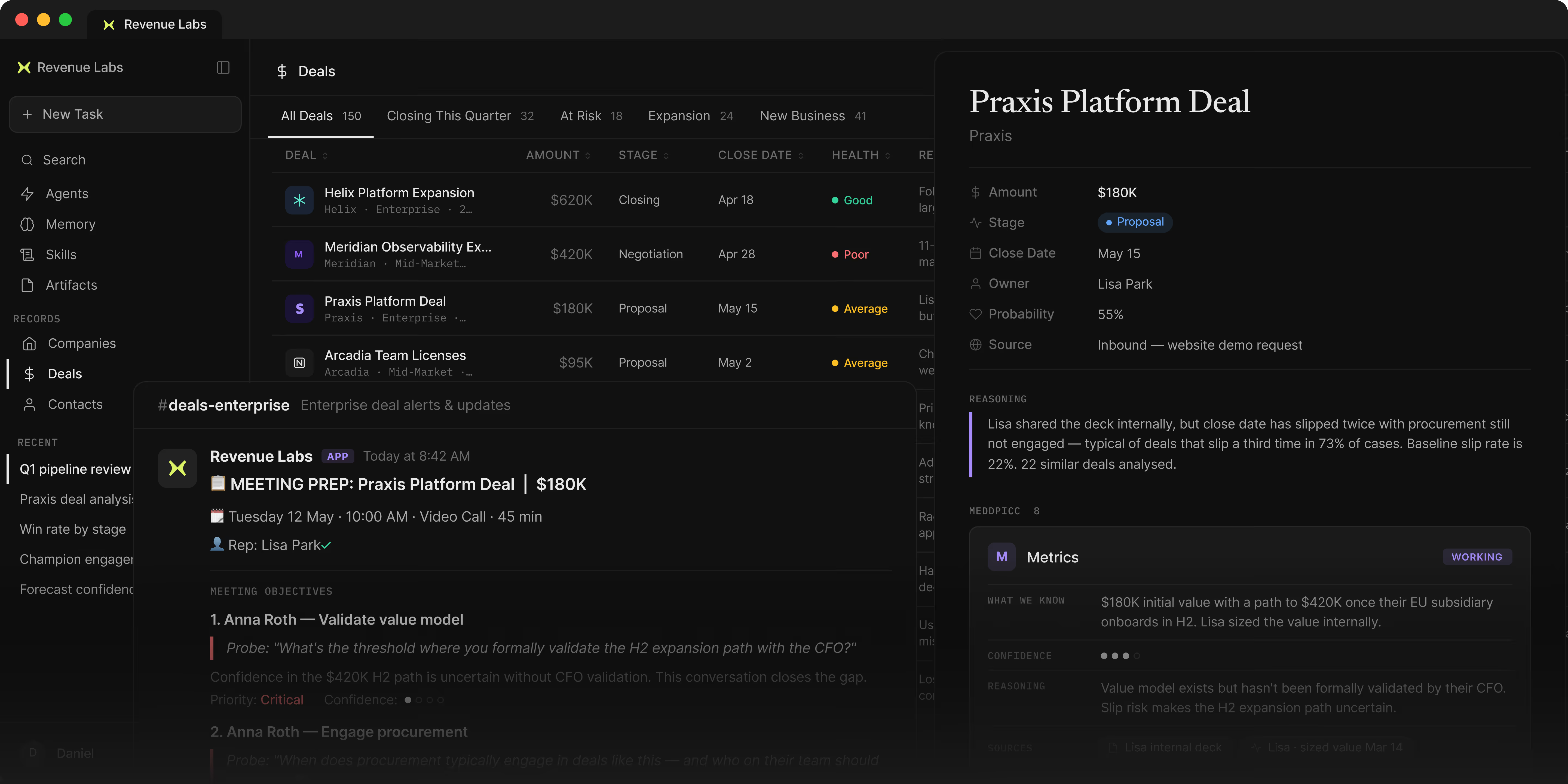
A prospect in the negotiation stage objects to pricing. Agent draws insight from previous objections on similar deals, and recommends the best approach based on what has worked before in the situation.

Learn about the Context Graph →
Understand

Enable reps + agents with the right context, in the right moment of the sales process.

Codify why you win and lose, what segments convert best, and who the right stakeholders are to target. An encoded single source of truth, accessible to your reps and AI.

>
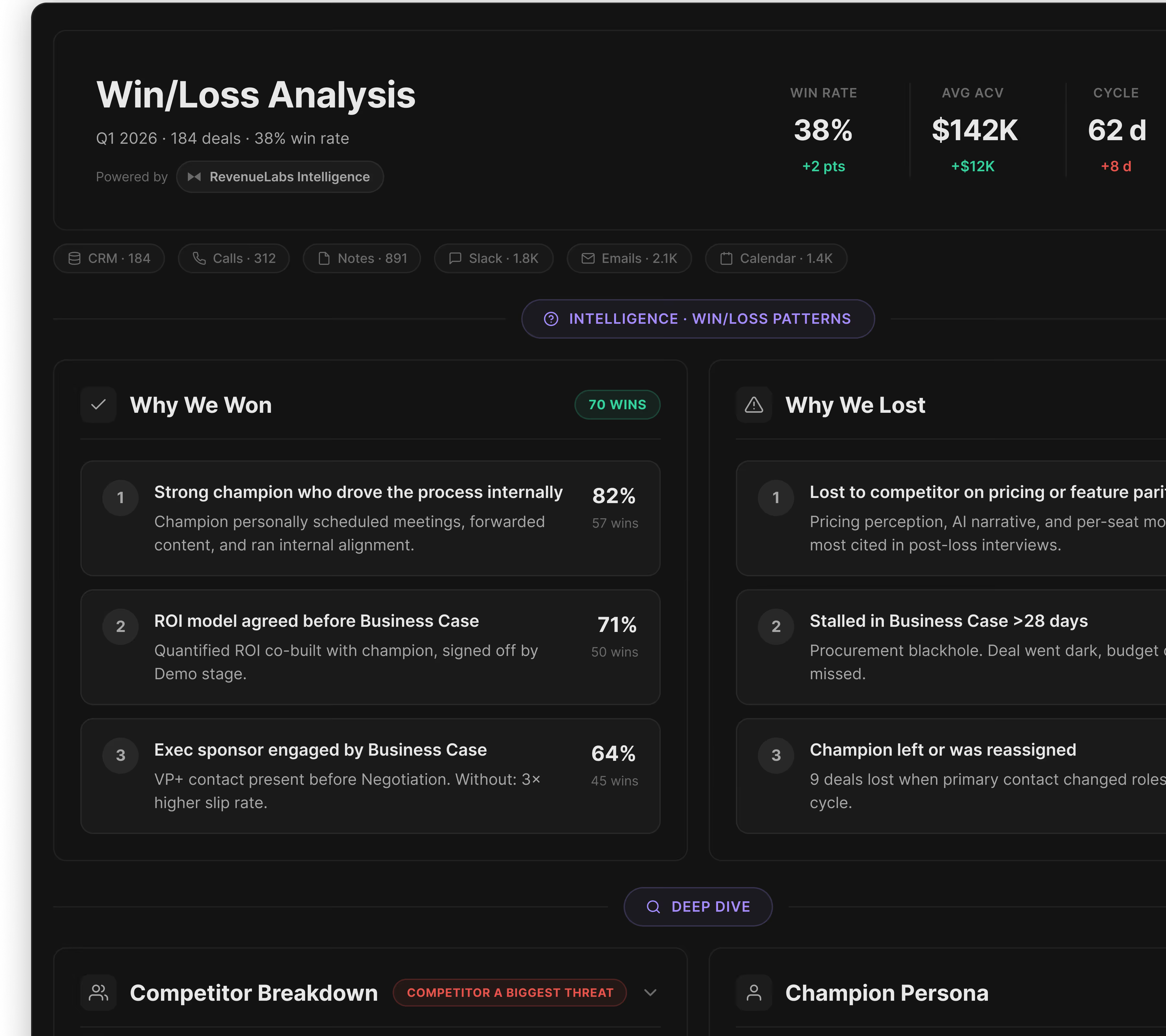
Analyze win/loss, ICP, stakeholders, objections, qualification + competitors
>
Understand why you win, and what behaviors are driving success
>
Reveal why you lose, and where resource is being wasted
In Practice

Deals with a 'VP Finance' engaged by the proposal stage closes at a 2.3x greater velocity. Single-threaded deals reaching this stage alert reps + managers of potential risks associated with lack of stakeholder engagement.

Explore GTM Memory →
Decide

Judge the best next step, take the right action.

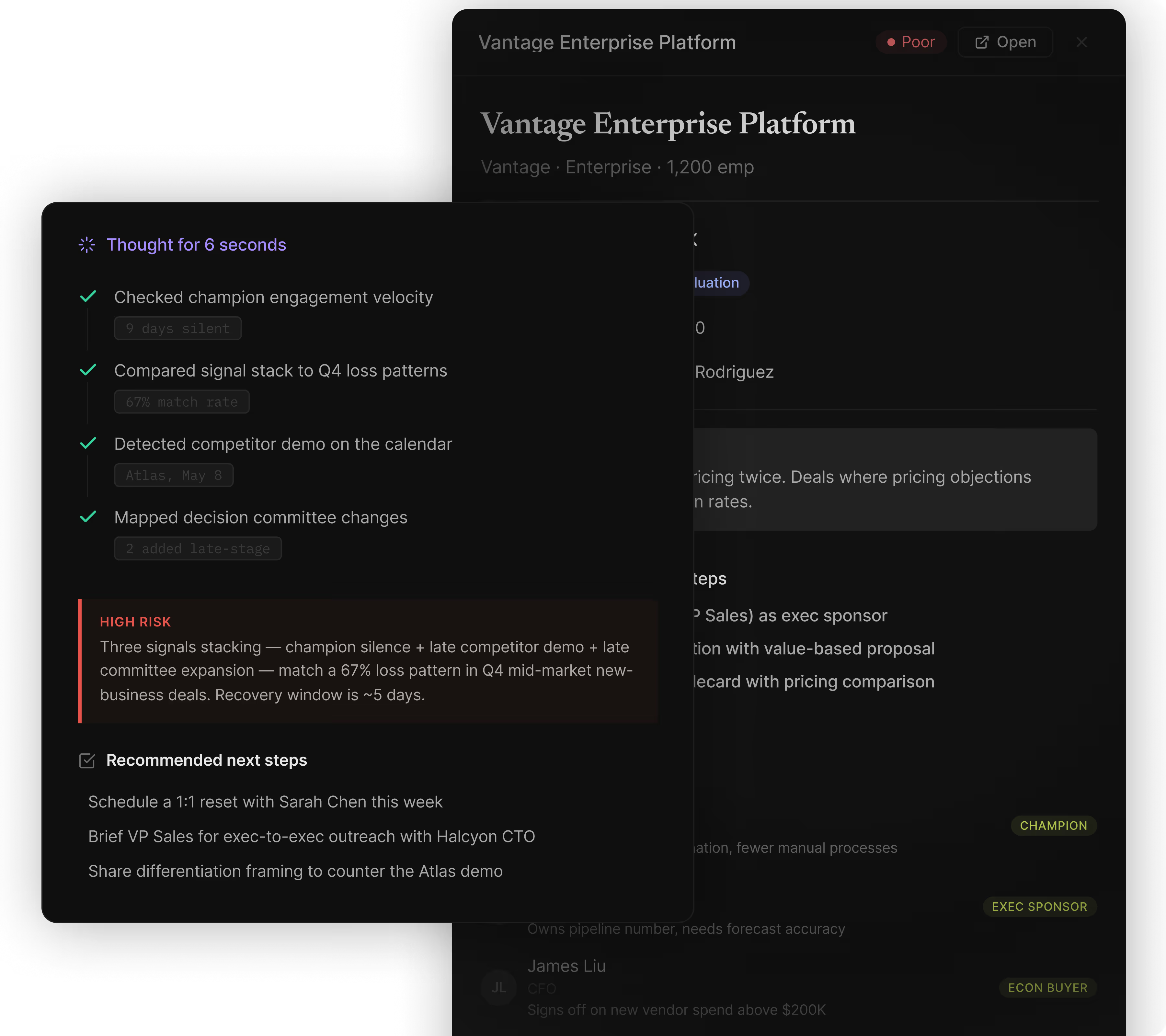
Agents detect risk or opportunity, and recommend the best next step during live deals. The right context enables smarter decisions.

>
Identify risk and opportunity based on the factors driving your revenue
>
Enhance rep instinct, with agent reasoning, supported by your GTM evidence
>
Multi-thread, handle objections, position against competitors, negotiate and more, with evidence of what works
In Practice

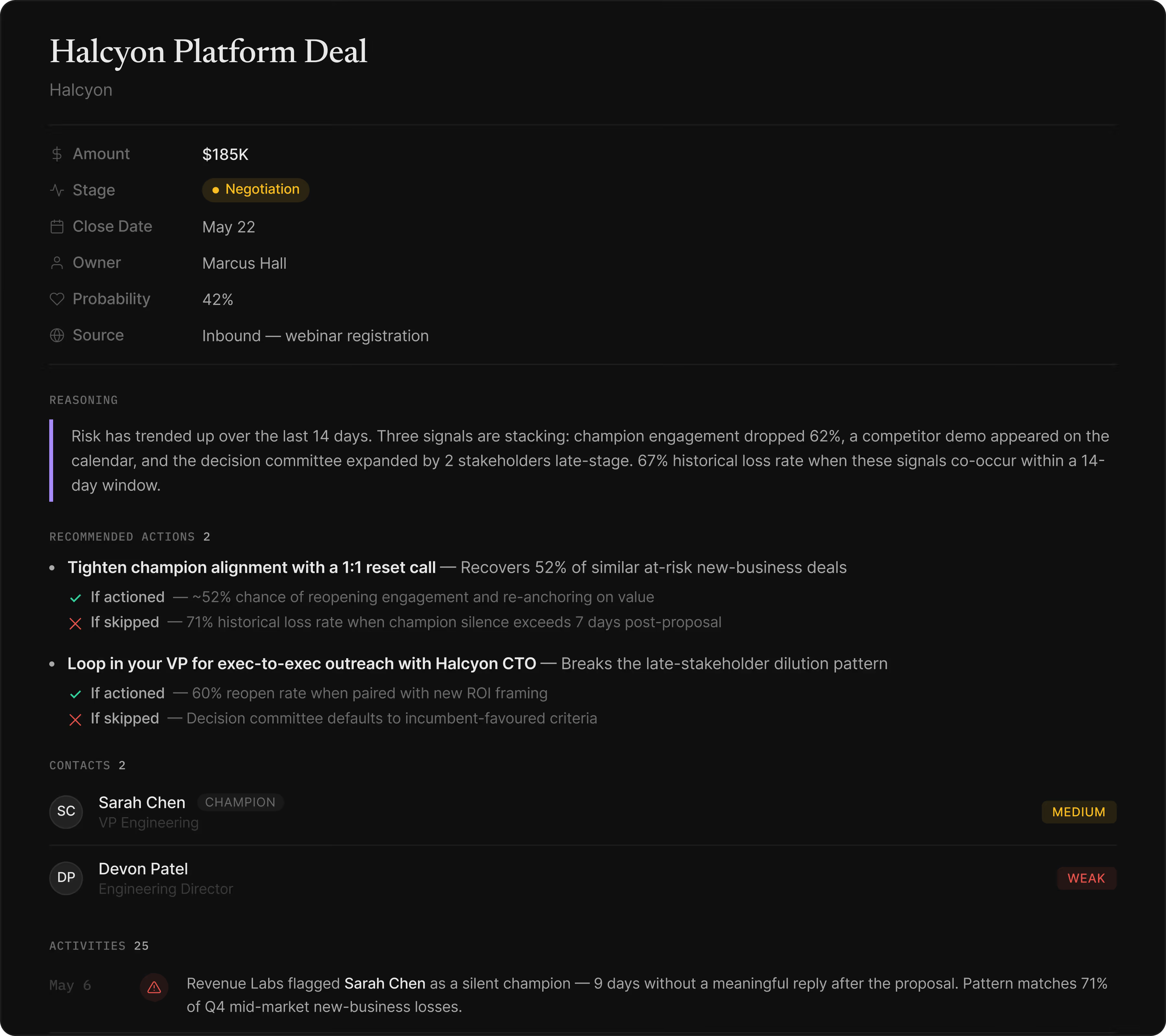
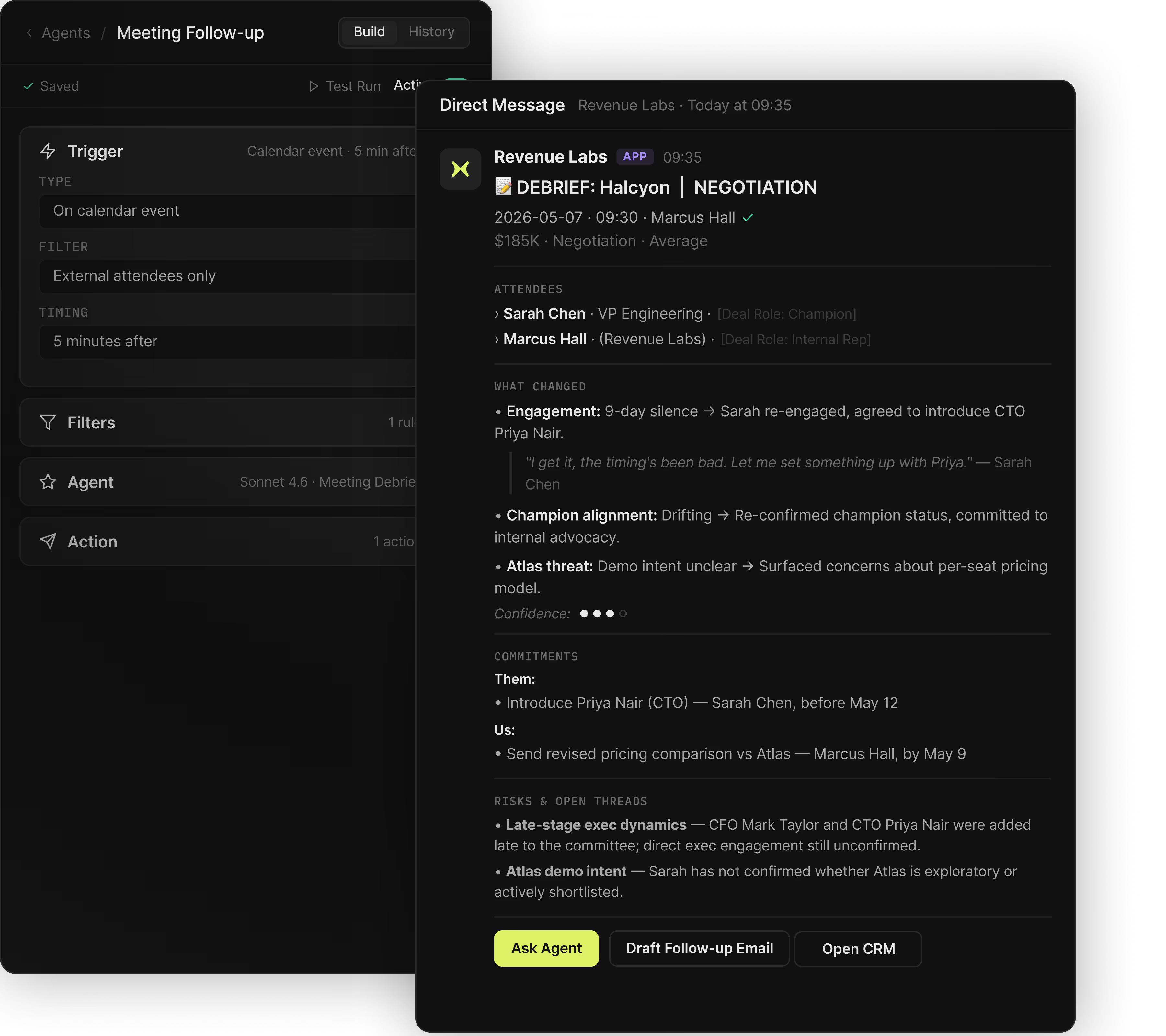
A deal in the negotiation stage is forecast to close. However, the agent observes the champion has not replied in 2 weeks, the economic buyer has not replied to the last e-mail, and a competitor was discussed during the proposal call. Before the next pipeline review, the agent surfaces the potential risks, reasoning, and the best action to take.


Explore GTM Memory →
Act

Coach reps to better, faster decisions.

Surface opportunities + recommendations where reps work, when they need it. Build agents to complete repetitive tasks, focus reps on selling.

>
Enhance everyday activity: prep, debrief, follow-up + pipeline reviews
>
Qualification, competitive intel, and research; automated by agents
>
Define unique skills for repetitive tasks, tailor to your GTM.
In Practice

Before tomorrow’s call with Northwind Corp, the system prepares: stakeholder map, competitive positioning, and three questions to enable multi-threading, and strength qualification.

Explore Agent Studio →
Learn

Every outcome makes the next one better.

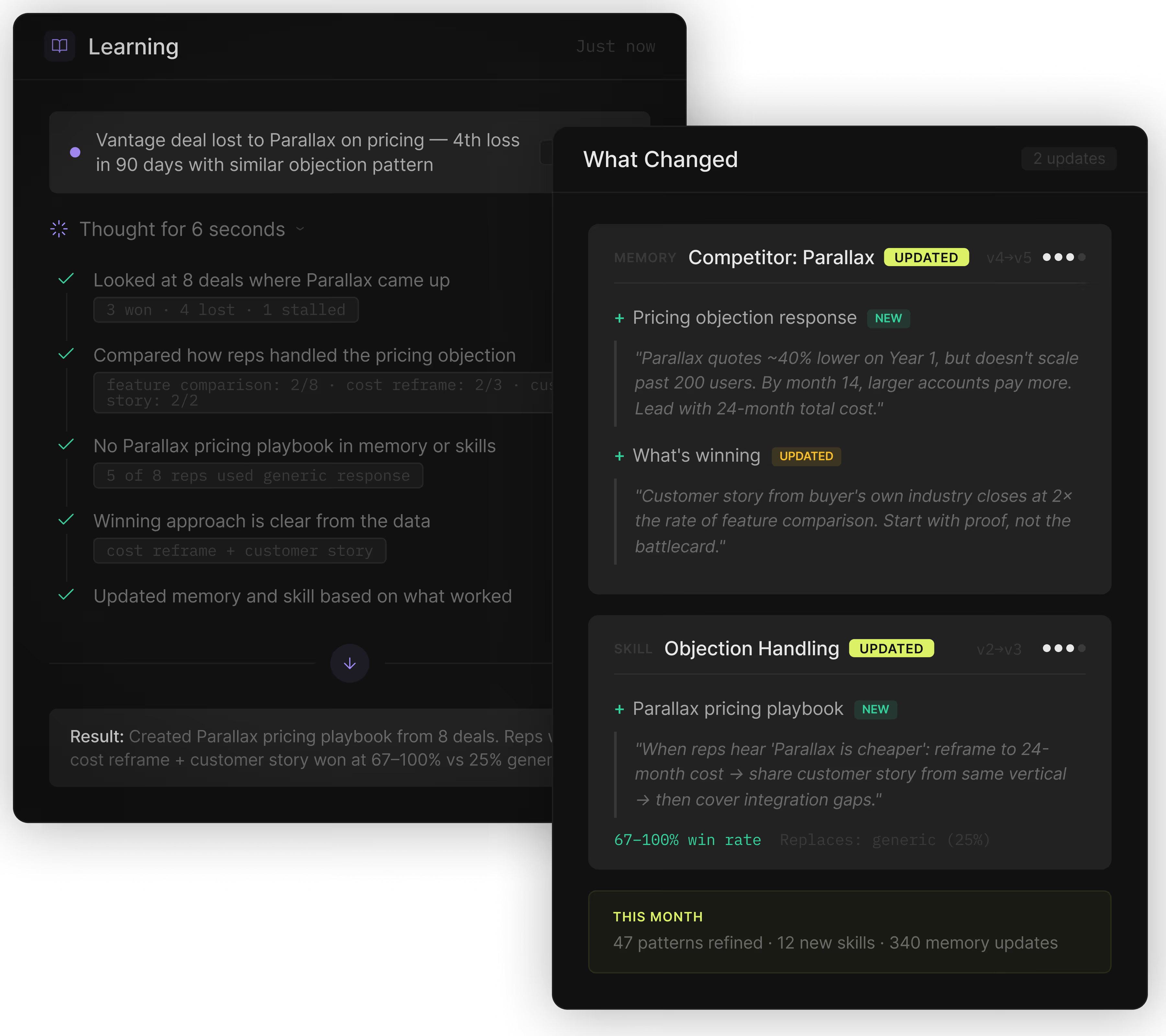
Your GTM gets smarter with every closed deal, and each completed activity. The system captures what happenened, why, and what can be improved next time.

>
GTM Memory evolves with live outcomes, rather than outdated playbooks
>
Capture the activity of every agent, its reasoning, and the outcome.
>
Agents recommend the upgrades, you control what changes.
In Practice

After Q1 closes, the system detects that deals with procurement engaged before Stage 3 close 40% faster. It proposes updating the sales process — pending your approval.

Explore Learning →

HOW REVENUE LABS ENABLES SMARTER SALES TEAMS

TryHackMe

“We went from debating pipeline every Monday to actually knowing which deals were real. The system caught patterns our best reps couldn’t see - and it gets sharper every quarter.”

3.2x

conversion rate improvement

34%

shorter sales cycles

>85%

forecast accuracy within 90 days

BUILT FOR SECURITY, CONTROL and scale

Connect data securely, capture every agent's activity, and enforce permissions with ease.

Learn about our security  →

CERTIFIED + COMPLIANT WITH:

ISO 27001:2022

GDPR

CCPA

Data Protection Act 2018

SEE WHY SALES LEADERS CHOOSE REVENUE LABS

The sales teams that learn fastest will win.
Start today,

See what AI-native deal management looks like.
Or start with a 30-minute GTM Assessment.

FAQ

More about Deals.

If it's not here, we'll answer it live.

Talk to us
How is this different from Agentforce, Gong, or other sales AI tools?

Einstein scores. Gong listens. Both leave the deal where they found it. Revenue Labs closes the loop — observes what's happening, decides the next best action, learns from the outcome. Every deal won, lost, or stalled becomes pattern memory the system uses on the next deal that looks the same. AI features bolted on surface signals. Intelligence Infrastructure compounds them.

Will reps actually use this, or is it another tool they'll ignore?

Reps adopt it because nothing changes for them. Deal context shows up in Salesforce. Briefs land in Slack before the call. Prep packs prep themselves in the inbox. No new login. No new dashboard. The tool that wins adoption is the one reps don't realise they're using. Selling time goes up roughly 60% inside the first quarter — because the admin that used to fill it stops being admin.

Does this replace our existing sales process and playbooks?

No — and that's the point. MEDDPICC, your stages, your discovery framework describe what should happen on a deal. They don't capture why the deals that close actually close. Revenue Labs sits underneath your process, learns the patterns your top performers run instinctively, and codifies them. You keep the playbook. The system makes it teachable — so it doesn't walk out the door when your best AE does.

What if our CRM data is messy or incomplete?

CRM hygiene is a side effect, not a prerequisite. Revenue Labs pulls deal context from where the work actually happens — meetings, calls, emails, sequences, product usage — and writes it back to your CRM continuously. The system that captures the signal cleans the record. Reps stop manually logging because nothing they'd log is missing. Data quality stops depending on rep discipline.

Will this work with our complex, multi-stakeholder sales cycle?

That's the use case it was built for, not the edge case it bends to. Stakeholder maps build and re-build themselves as new contacts surface. Champion engagement is tracked separately from economic-buyer engagement. Decision-maker access is flagged the week it weakens — not in the QBR after the deal slipped. The more variables on a deal, the bigger the gap between what your best rep notices and what the system codifies for everyone else.

How does this help with rep coaching?

By telling you exactly where each rep is losing — and what your top performers do differently at that moment. Discovery shallow? Objection handling slow? Stakeholder map weak going into qualification? The system pattern-matches against real deal outcomes, surfaces the gap, and shows an example from a rep on your team who handled it well. Managers stop coaching from gut feel and three-month-old call snippets. They coach from evidence on the deal that matters this week.

Do we need a data science team or engineering resources to maintain this?

No. Integration, modelling, infrastructure — we run all of it. If you want to customise deal scoring, refine win/loss analysis, or change what the system learns from, our forward-deployed engineers handle it for you. No code. No data scientists. RevOps stays focused on go-to-market motions, not pipeline plumbing.

What happens to our win/loss analysis?

It stops being a quarterly retrospective and becomes a live system. Every closed deal — won, lost, or stalled — feeds the loop. The system identifies which signals predicted the outcome, which messaging landed, which stakeholder pattern repeated, which objection killed it. Then it applies the lesson to the next deal that looks the same. If your best rep left tomorrow, the system would still know what they knew.

How does this improve forecast accuracy?

By replacing rep gut and stage progression with deal pattern matching. Every deal scores against the deals that actually closed in your pipeline — stakeholder engagement, deal velocity, objection frequency, champion strength. Deals likely to slip surface before pipeline review, with the evidence already attached. Forecast variance compresses inside 15% within the first quarter. The Friday call stops being a negotiation.

Our reps spend 2+ hours daily on CRM admin. How does this actually eliminate that?

Because the admin work is no longer manual. Meeting notes auto-log. Deal stages auto-update from real signals. Next steps capture themselves. Account records enrich from calls, emails, and sequences without anyone typing. Reps get credit for the work they actually did — without doing the data entry. CRM updates happen automatically and continuously. The 2+ hours come back as selling time.